52 Photos ~ Fire

Fire

Bee smoke

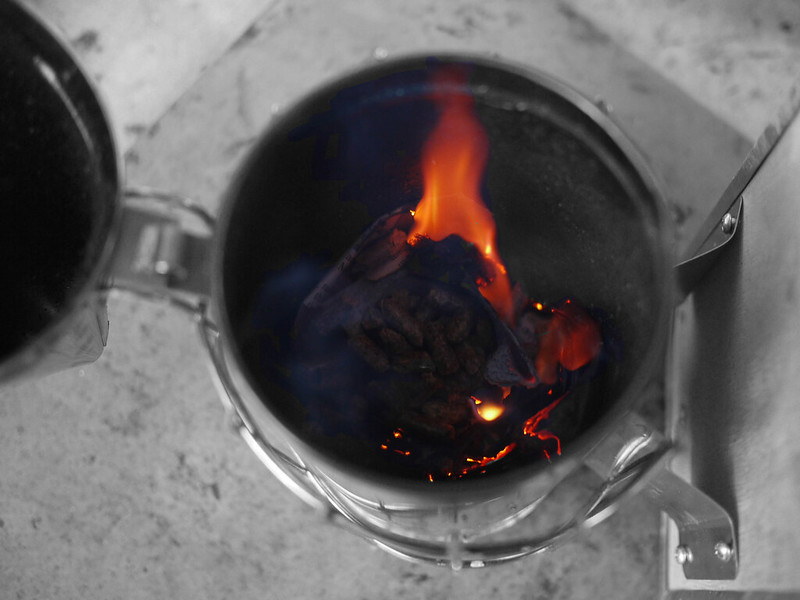
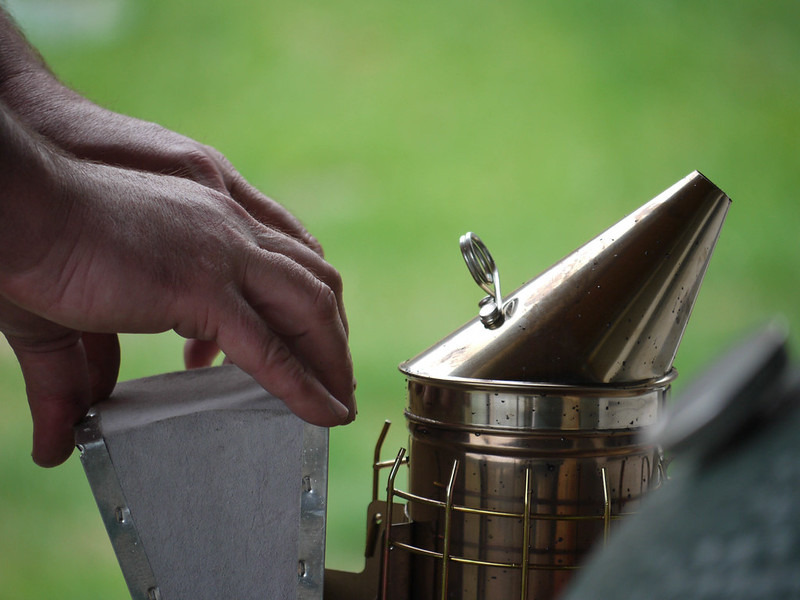
To approach the beehive, beekeepers light a smoker.

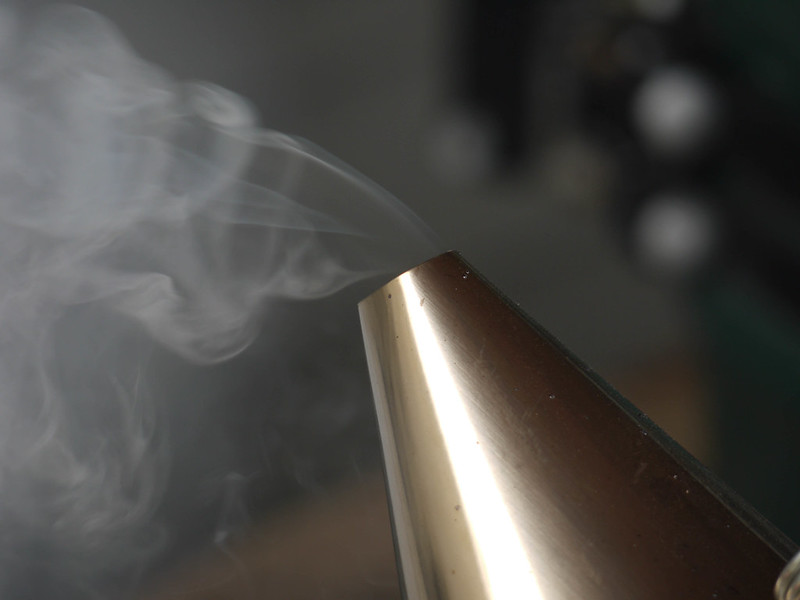
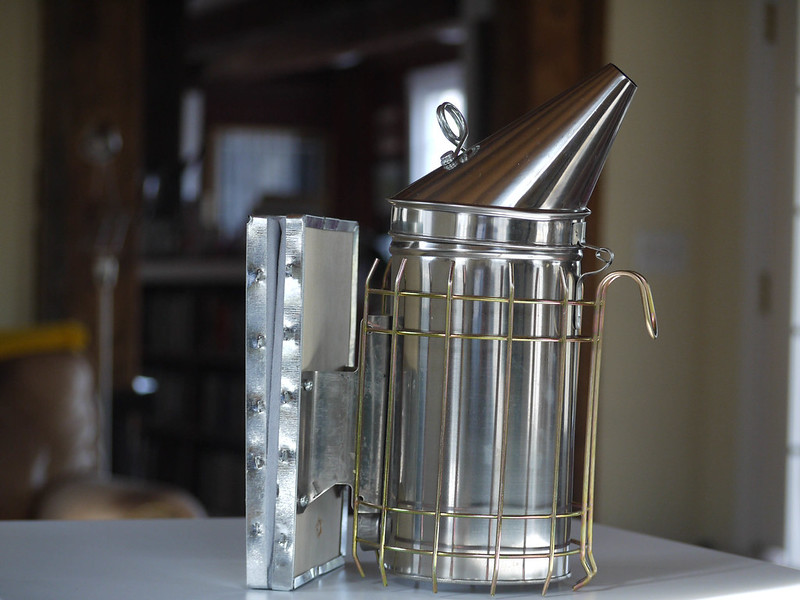
A bee smoker is a little lidded can with a built-in bellows. You start with a piece of crumpled newspaper, light it, and drop it to the bottom of the smoker, then use the bellows to puff puff puff until you get some good licking flames, and then you add the fuel (dried pine needles, dried grass, wood shavings, fuel pellets, what have you), keep puffing and, in minutes (in theory), you get a strong plume of cool-to-the-touch smoke.

In fact, this process takes some practice. It’s easy to get a flame, and then it’s easy to kill the flame. You can get hot smoke and sparks fairly easily, too. But getting the cool, thick, lasting smoke is the trick and we’re finally getting the knack of it. Almost.

When you’ve got consistent smoke, you don the bee suits and head to the hive. Puff the hive entrance where the guard bees are keeping watch, let the smoke seep in. You and the bees are quieting. There’s smoke in the air and it’s the sunny part of the day.

Let the smoke swirl. Lift the lid of the hive. Spread the smoke around the lid, down into the frames. Thousands of bees, busy but calm, focused on their jobs.

And we just can’t look away.

Every time we visit the hive I want more time. There are so many details to absorb, beyond merely tending to the needs of the hive (refilling sugar syrup feeders, removing extraneous comb, checking for eggs and larvae).

Every time we visit the hive we come back with more questions. For instance, do bees sleep? Yes, we read, they do. In fact, you might come across a bee napping in a flower. Imagine that.

We’ve yet to see the queen. Did I tell you we named her Elspeth? She’s marked with a green dot so we have a prayer of seeing her, but so far she’s been hidden, doing her work, surrounded by her attendants.

We check the hive only every three to five days so as not to disturb them too much. And we need to wait for the weather to cooperate; it’s no good to open the hive on a blustery, rainy day.

On hive-check days, I go to bed with the smell of smoke in my hair. The same as on a camping day, or after an evening by the fire pit, roasting marshmallows, watching for meteors, and musing about the dreams of bees.

~~~~~~~~~~~~~
This is my first photo in the new series of 52, running from May 2014 to May 2015. If you’re interested in joining (it’s never too late!), check out the 52 Photos Project blog.

These photos and post are in response to this week’s theme for the 52 Photos Project. You can see a gallery of everyone’s photos for this week’s theme here. To see a list of all my blog posts for this project, go here.

Next thing, they’ll be studying for their learner’s permits

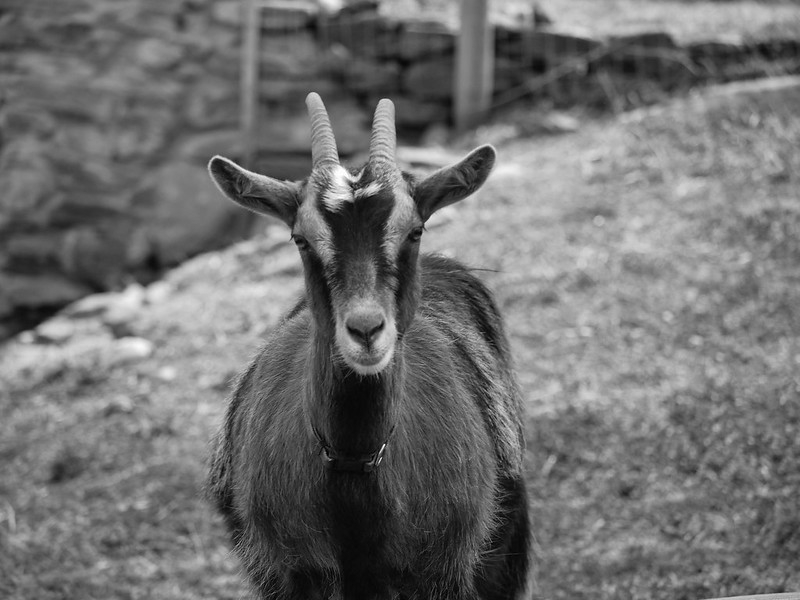
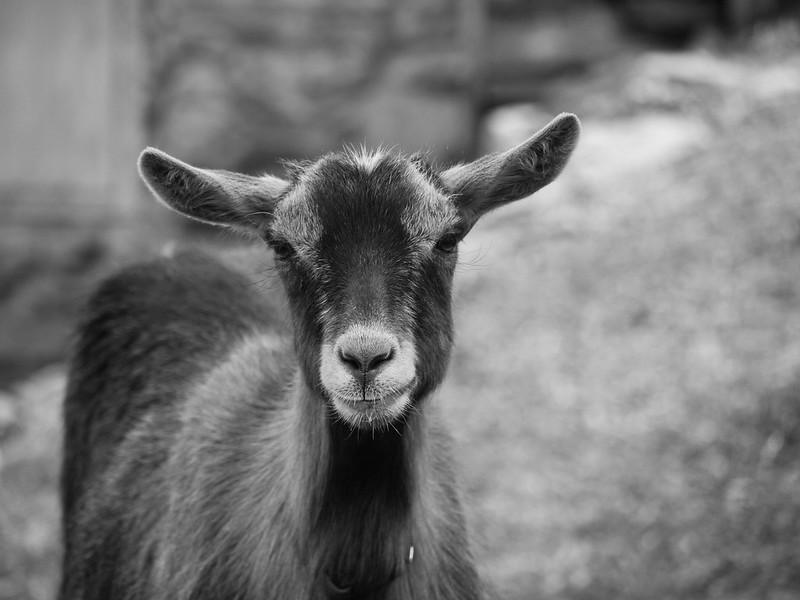
Today they turn one.

It’s nothing like the bittersweet when you watch your friend’s children, or your own children, grow beyond your hold. They’re just goats, after all.

Even still.

How could they have gone from this to this in just 12 months? They did it so incrementally that we barely registered the changes, the way H came to be taller than I am, the way the grass goes from winter straw to “If you don’t mow it now the yard will become an unrecoverable jungle!”

What else has happened in those 12 months that I didn’t notice, and that’s now irretrievably lost?

Oh, best to avoid that particular rabbit hole today, when I’m thinking about Mother’s Day and having just listened to Roz Chast’s moving interview on Fresh Air about the loss of her parents.

Nope. Won’t do that. Won’t think that.

Instead I’ll think about how gorgeous those little goat girls have become; how Doris loves to have her head scratched just behind those horns; how Darcy hangs back, like a shy girl at the dance, but is all in for a cuddle once you crouch down in the straw with her.

I went out in the May sunshine and told them the story of their birth. They didn’t give a darn about that, but the treats in my hand held their full attention. I sang “Happy Birthday.” They gave me that goat look, the one that says, “We love our humans, but we’ll never really understand them.”

Doris-Maurice at 1

Darcy at 1

Nothing but time

Apple tree waking up

Pure silliness. Egged on by the promise of a plan-free weekend with clear weather, we started a mental to-do list on Saturday morning, once again blind to the difference between the time it takes to say a task and the time it takes to do it.

No matter. It’s a spring weekend. We’re beguiled by opening day at the Farmers Market, warm sunlight, a chance to drive with the car windows down, chorusing morning birds, extra minutes of daylight, and nothing pressing on our calendar. We can do what we want!

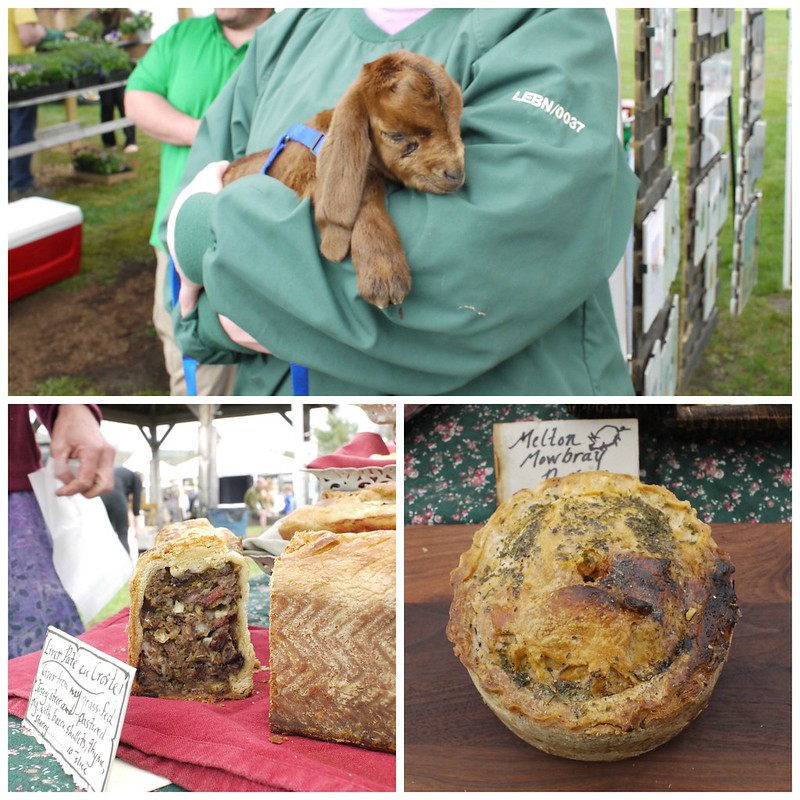
So we did. After morning chores, we sped off to the Farmers Market, bustling and busy even this early in the season. We met a six-day old Boer goat, we bought apple turnovers, we bought and ate the most wonderful pierogi I’ve ever had, then we went back and bought and ate some more.

Then off to the co-op for supplies for the various cooking projects we had in mind (tamales, slow-smoked ribs, mini quiche), then a quick stop at a consignment clothing sale in the next town over.

Home again, put the groceries and market treats away.

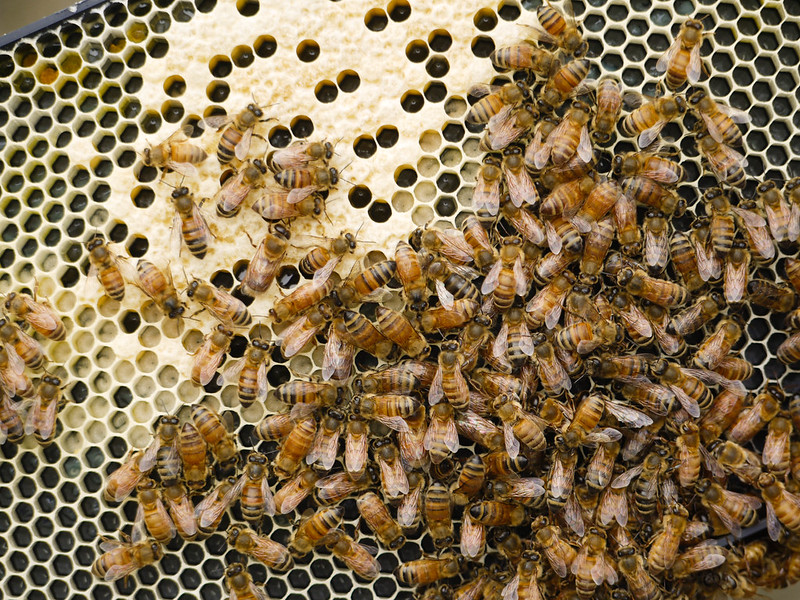
Visited the bees! This time we were looking for evidence of eggs and we found them. In the black frame cells, you can see small white lines, like grains of rice. Those are eggs. In other cells, there are curled larvae, the next stage. Other cells are waxed over: capped brood. This is where the fed larvae grow, until they emerge as fully-formed bees in a couple of weeks.

This is exciting. Seeing all this evidence of soon-to-be bees means the queen is healthy and doing her work. We haven’t seen the queen yet (since we put her into the hive in her cage), but we know she’s there and we’re hoping to spot her when we next open the hive.

M also noticed at least one worker with full pollen sacs (see the bee with bright yellow “saddle bags” in the middle of that second bee photo?). This means they’re starting to forage out in the world and will become less dependent on our sugar water and will be bringing back wild pollen and nectar. Bee happiness.

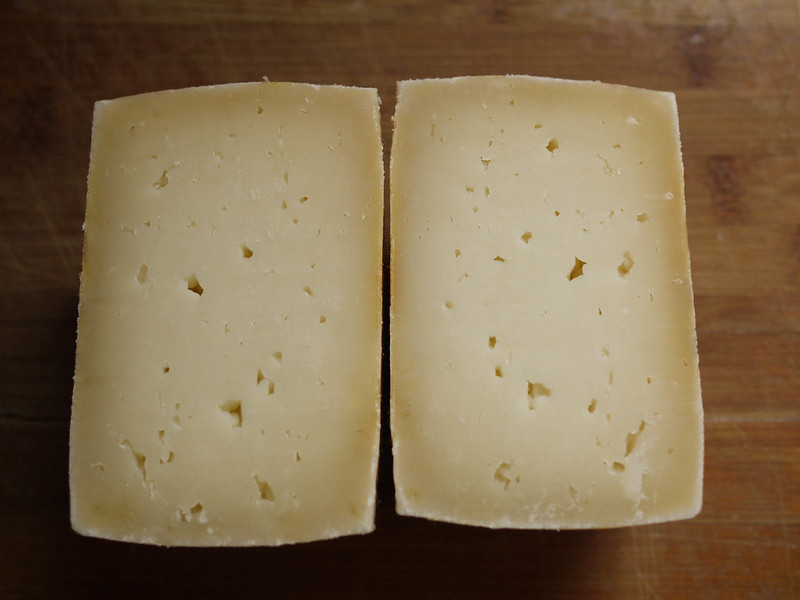
On a roll now, we decide to open the goat-milk cheddar that’s been aging in the cool basement since early January and we deem it quite acceptable.

The weekend rolls on and into Sunday. The cooking projects invade the kitchen and the Egg on the porch. We’ve got tamales and ribs in the works, yes. And a new batch of cheddar culturing. And a small pot of rhubarb jam bubbling down to sticky sweetness on the stove. And M saw some beautiful bluefish at the co-op so, after a day of drying in its rub on Saturday, that’s now smoking on the Egg. Meanwhile we’ve promised to make several dozen mini goat cheese quiches for H’s elementary school’s annual Medieval Festival (if you live around here and have kids, you really need to go. It’s a blast and we’re fairly sure that it won’t snow this year…)

At some point, late afternoon, H is at rehearsal for her school’s spring musical and M and I are whirling around the kitchen, busy as bees, laughing at the ridiculousness of how much we’ve taken on, the sink piled high with dishes, every pot used, the oven cranking away.

It’s crazy, exhaustingly wonderful.

By dinnertime, we’re running out of steam. We’ve made all the food to eat (plus a tamale pie, plus other things I can’t even remember) and have just enough energy to pile the plates, open a bottle of prosecco, and fall onto the couch, where we watch Audrey Hepburn in “Wait Until Dark” while the evening drapes darkness around the house.

There are still dishes to do, books we were going to read, blueberry bushes we were going to buy and plant, photographs to take, things to write, things to plan, more lists to make.

Ah well. Maybe next weekend.

FarmersMarket

Starting the smoker

Eggs! Larvae! Capped brood!

Full pollen sacs

Clothbound goat milk cheddar

Clothbound goat milk cheddar - disrobed

Clothbound goat milk cheddar - paste

We begin with the bees

First day

It’s been just under two weeks since the bees came to live with us, and I already feel such unexpected affection and affinity for them. I’ve always liked bees, or the idea of bees, or the form of bees: their fuzzy striped bodies, their matrilineal society, their essential work pollinating flowers and fruit trees, their waggle dance.

But I didn’t think about the life of bees in more than a passing way until I was informed that 10,000 + 1 (queen) were soon to be coming to stay.

And now? I think about them all the time.
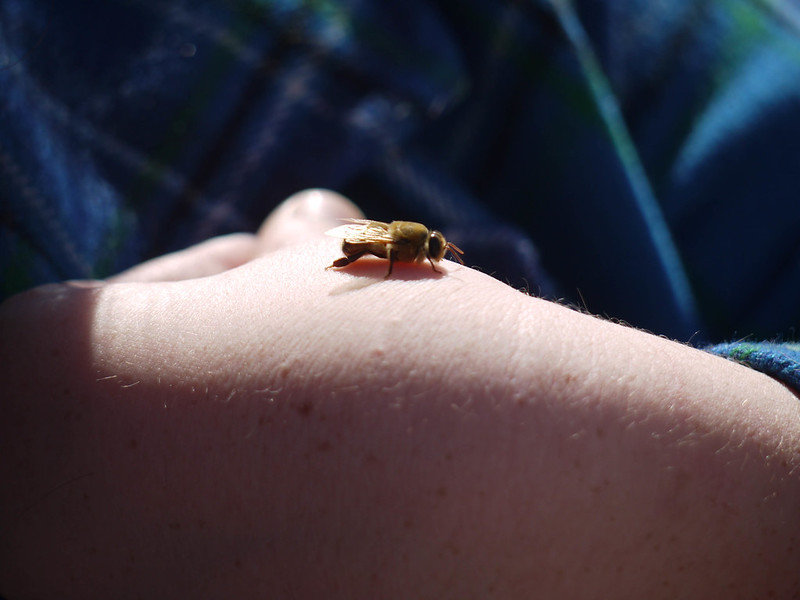
Drone friend

We’ve learned a lot in the last few weeks. For instance, bees arrive in packages (wooden boxes with mesh screen sides) that have been driven north from Georgia. On bee arrival weekend, everyone who’s ordered a package goes to the place where they ordered them and picks up their package.

The package contains approximately 10,000 bees (mostly workers, but also some drones), and a separate little cage inside that houses the queen. She’s locked in her cage by a plug of candy (really!).

Here’s our package, just after we picked it up and put it the car. They were very quiet. I expected to hear buzzing in the car, but most of the ride home we hardly heard them. They were probably a bit overwhelmed with all the travel, but I like to think the hum of the engine calmed them the way it calms babies and puppies.
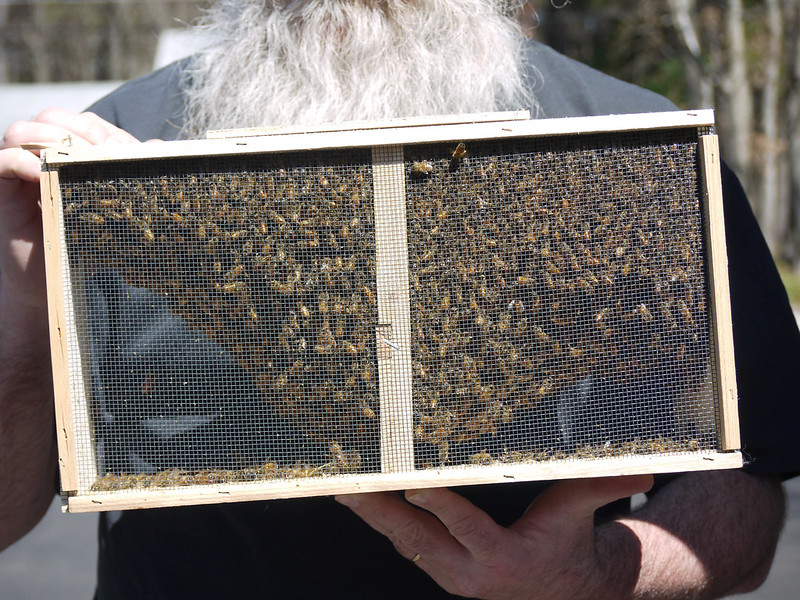
Our package

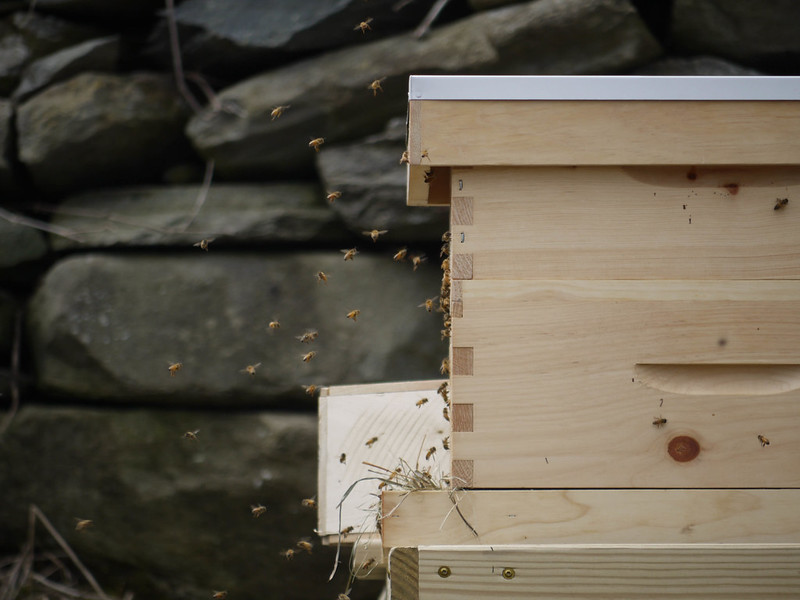
After we got them home, we finished setting up the hive. We left the package on the shaded porch, moved the new hive stand that Michael made over to the area we’d prepared the previous weekend (what used to be our garlic garden is now a hive garden), made the stand level by pounding it into the soil, then put the hive on top of the stand. The stand is a bit over 18″ high to keep out small curious animals who might be drawn to the honey (like skunks, which we never see around our house, but why take chances?).
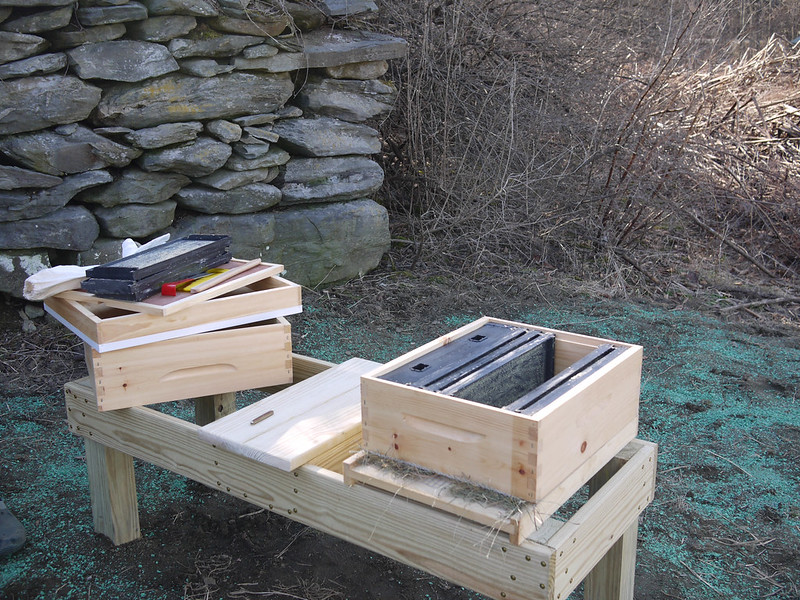
Bee ready

In the hive, we placed a set of black frames on which the bees will begin to build their comb and tend the eggs that the queen lays. We also inserted a hanging feeder filled with sugar syrup. This is what the bees will eat (along with a patty of protein that we supply them) until the flowers start budding and they can forage for themselves. Any day now.

Then we extracted the queen cage from the package so that we could put the cage into the hive. At this point, we made a mistake that almost lost us the queen (and where the queen goes, the hive goes), but quick action and thinking on M’s part saved the queen.

We need the queen. Without her, there are no new bees, and without new bees, the colony dies. A honeybee only lives a for a few weeks in the spring and summer (several months in the winter), so the bees in the package need to start raising up babies quickly, before they all die. The queen can live up to a few years, but if the rest of the bees die before she lays her eggs, there’s no one to tend the eggs until they emerge as new bees.

(See how much I’ve learned this month?)
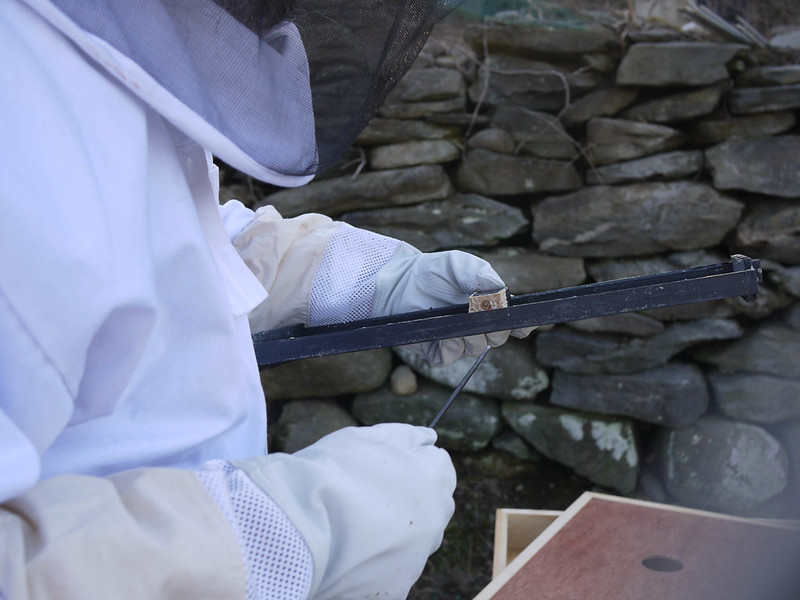
Making a small hole

Since we need to make sure that the queen stays with the hive, we want to make sure she knows it’s home. The separate cage keeps her contained and surrounded by her colony for a few days until they’ve accepted the hive as home. They release the queen by nibbling away that candy plug. It takes a couple of days. By then, they’ve begun to settle in, releasing pheromones that mark the wooden box we’ve provided as home sweet home.

To start the process, before we put the queen into the hive, we used a screwdriver to make a small hole in the candy. The workers do the rest.

Attaching the queen cage

After we attached the queen’s cage to a frame, we spritzed the rest of the package with sugar water. This distracts them for a bit and gives them something to do (namely, clean it off their wings and bodies) other than get angry with us while we move them from the package to the hive.

Once they were well spritzed, it was mostly a matter of just turning the package over and dumping thousands of bees into the hive. I tell you, I’ve never experienced anything like it before. Thousands of bees pouring out of the package, some of flying around our heads (we were spectacularly protected by our white bee suits, which allow you to be calm and quiet around the bees without worrying about a sting), others crawling around the hive box and the stand.

Bees "installed"

Then we carefully closed up the hive and left them alone to adjust to their new home. They tolerated us very well that first day, but we want them to be very happy and not feel that they’re going to be disturbed all the time.

We want them to want to stay.

They’re wild animals and if they feel threatened, they could just head out looking for a hollow tree trunk or some other home. So… we stare at the hive from afar, and walk past it at a respectful distance, and wonder what’s going on in there. Are they happy? Is the queen alive? Is she laying eggs?
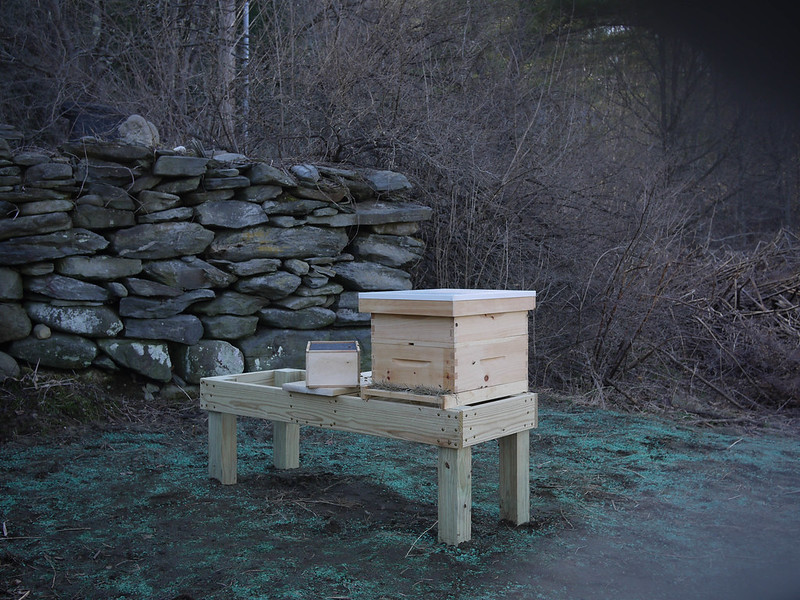
All settled in

Four or five days in, we checked the hive and learned we’d made a mistake. We gave them two levels of the hive, one with the black frames and another with no frames but with an extra sugar water feeder and food. So rather than build comb on the frames, they started to build it in the empty box, on the lid of the hive, near the food (makes sense; why not do the work near the kitchen?).

That evening, we removed the extra comb and extra hive level, and put most of the bees back into the first level. Before we could return all the bees, some flew down and clustered on the legs of the hive stand. We captured and returned many of them to the hive, but it was getting dark and we missed some. We lost a few bees that night. We felt dumb and sad about that, but we’re learning to think in terms of the collective and not the individual. Like bees.
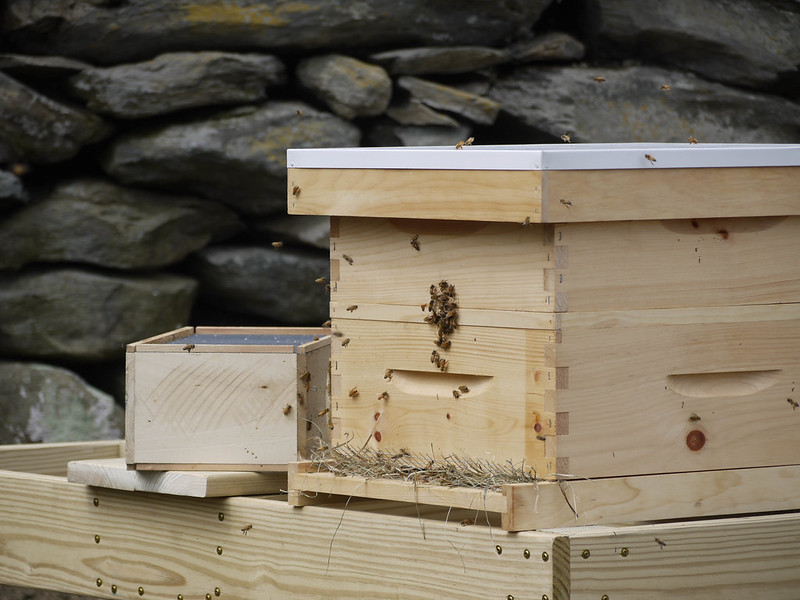
Making themselves at home

We left them for several more days to settle down from the disruption we’d caused. When we opened the hive again earlier this week, we carefully checked the frames. The bees have been busy building comb. They clung to the comb as we lifted each frame up and examined it. In many of those comb cells, we saw eggs and larvae, the beginning of the next generation of our colony.

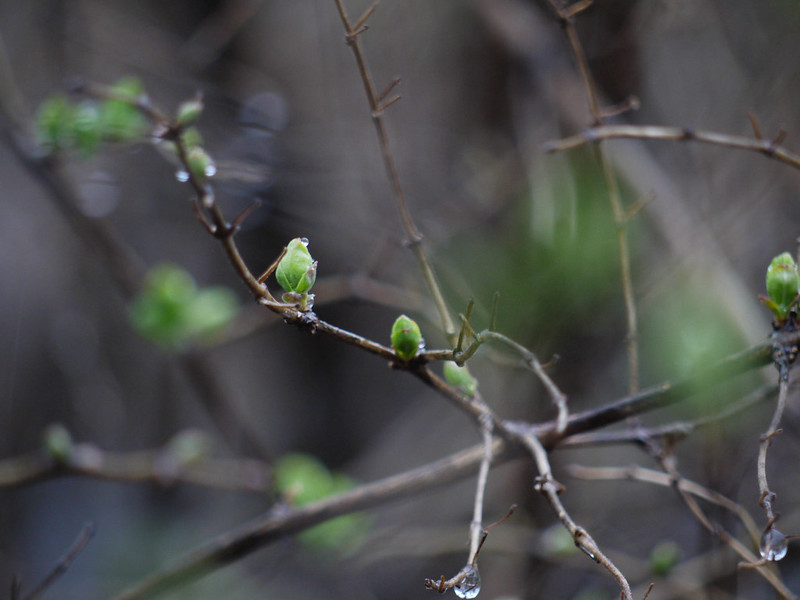
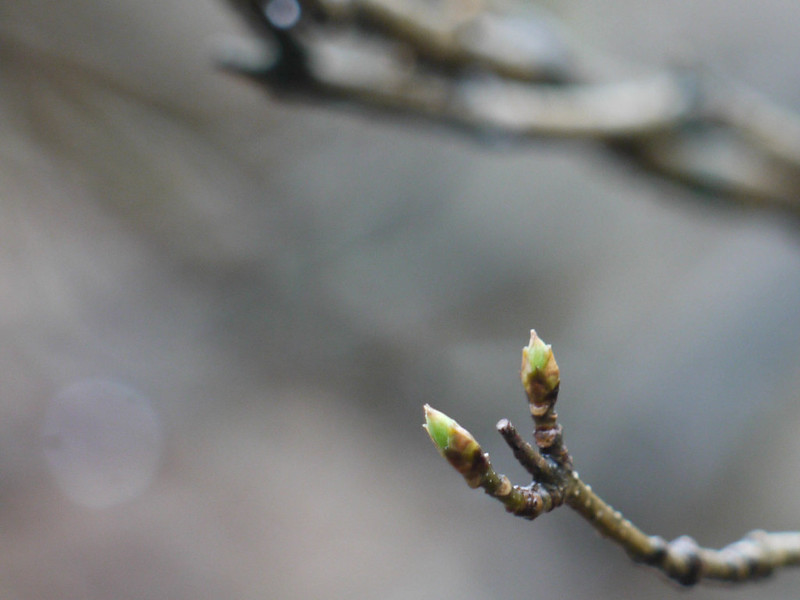
Just this week, the lilac and apple tree buds are emerging. And on my way to H’s school yesterday I saw some type of flowering tree that was white with blossoms. Soon, if not already, the bees will be foraging, collecting nectar and pollen. And making honey.

I can see the hive from my desk. Sometimes I see a bee buzz by the window and think, “That’s one of OUR bee friends!” I think about their methodical yet rapid work (they built this beautiful comb in just days). I think about how they all pitch in together for a common purpose.

I believe I have a lot to learn from them.
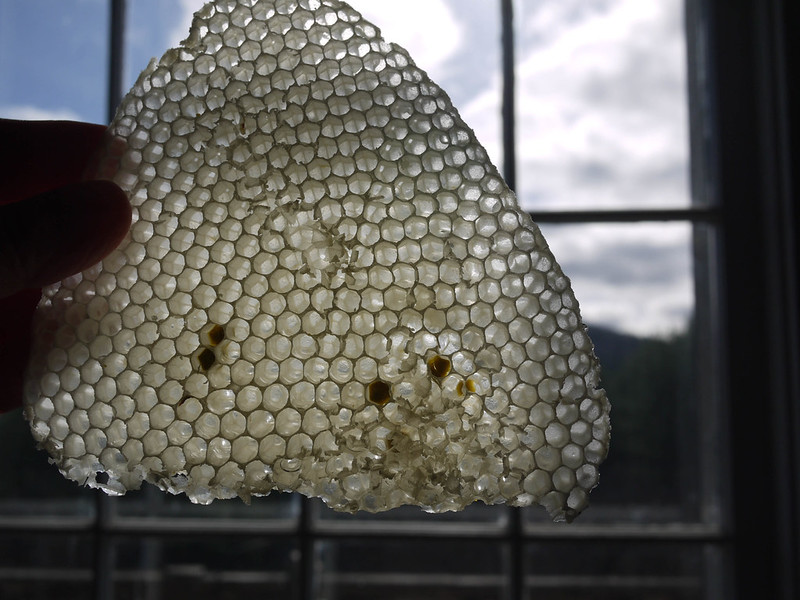
Comb

Open to the rain and flowers

Wind and rain

Crabapple buds

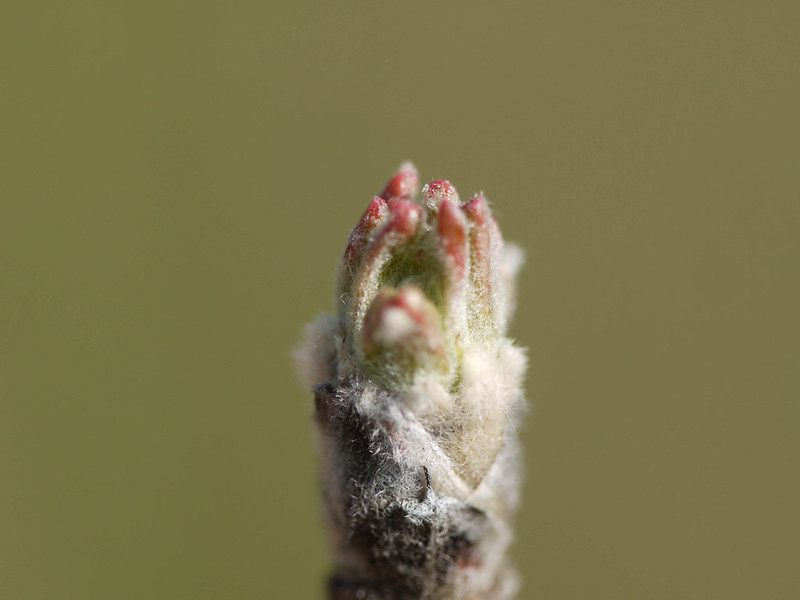
Golden Russet bud

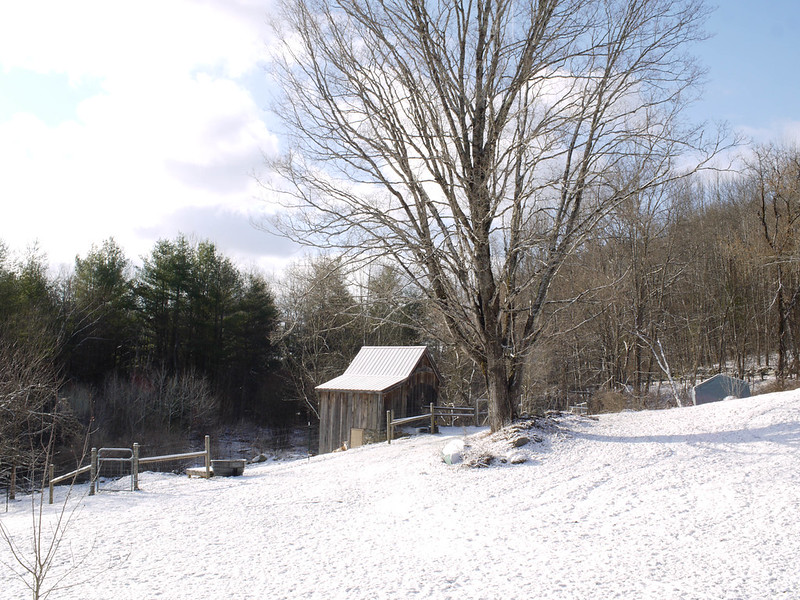
What happened between the time that poetry month started and now is that spring arrived. The piles of snow are long gone. The birds are raising a ruckus at dawn and dusk. There’s a bird at twilight whose call is a creaking thing, like a complaint, or an unoiled door hinge. We don’t know what that bird is, but we enjoy making its noise back to it. A conversation for us, if not for him or her.

What happened is that the brown buds on the fruit trees have turned furry and are peeling themselves open to reveal pink. Spring is coming slowly, as it should, and the blooms are pacing themselves accordingly.

What happened is that I’ve been basking in poems every day and spinning lines in my head, and sometimes even scribbling them down in my notebook. These are blooming slowly, too.

What happened is someone long from home finally returned to where she should be.

What happened is, on a spring evening, there were three of us, driving on a road parallel to the river just after dark, music on the stereo, and we were there. I was in the back seat, with my teeth in my mouth.

Everything is beautiful.

~~~~~~~~~~~~~~~~~~~~~~~~~~~~~~~~~~

One last poem for this month of poems.

This one is written by my friend, Mary Kane. Her book Door was published earlier this year and I love her words. I’ve had a hard time choosing just one poem to post, but I finally decided to share the last one in the book, because today the rain is pattering, and the world is getting green.

There Will Be a Woman Written in as a Wren

I’m collecting folding chairs for use in the very big poem I
am getting ready to write, something about the size of a small
auditorium, only open to the rain and flowers. You wouldn’t
believe the way the look of a young cherry tree or a street or
a husband can be altered by even a single day without speech.
I might use a broom to paint the corners of the poem, and
there’ll be a young boy tossing a baseball in the air, higher
and higher, always catching it in his glove. I have shells in
my throat. It makes it easy to sit by the window watching the
world get green in the rain, not making any sound. The young
boy with his ball and glove has no fear of the sound of his name.

–Mary Kane, from Door, Copyright © 2013 by Mary Kane

52 Photos ~ Clouds

Clouds 4

Clouds 3

Clouds 2

Clouds 1

My husband’s people live in a land of cloud watchers, a place in the middle of the country where there are big lakes and scarcely a hill, and all you can see as you drive down the highway is the cloud dappled sky that goes on and goes on. But most of my life I’ve lived on rippled lands where clouds are obscured by hills, mountains, and trees. I spent more time looking down or through than up.

I came to notice clouds gradually, in the way you come to notice the rooms in the house where you grew up, first unaware, taken for granted, and then completely, knowing every corner, hallway, doorframe, and creaking floorboard.

I first learned to love the low clouds we can see most mornings from the porch, the ones that cluster in the eastern sky like grazing sheep, just over the hill, making a fleecy lid for the chilly river. These are the clouds that sometimes forget their place, drifting down into the valley to perch lightly on the trees as fog.

Up early with the animals and my camera, I watched these clouds gather and roam, join and separate. I waited to see if the sun’s first rays would slide out below or above them. I started looking for the subtle moment when grey turns to pink turns to orange turns to white.

Now I find I can’t travel a road without checking out the sky, cataloging the shapes and colors: flat-bottomed cumulus and stratocumulus, tendriled cirrus like cotton candy strands pulled from a paper cone, speckled altocumulus pebbling half the sky, thick-flanneled stratus soaking the spring day, contrails drawn by transatlantic airlines making puffy Xs across the sky, menacing thunderclouds, thousands of feet tall, lashing a sultry summer afternoon with rain and lightning.

You could while away many an afternoon and never not see something new.

You could take a thousand photographs and no two would be the same.

You could clean the house, trim the goat hooves, fold the laundry, do the bills.

Or you could lie down along the earth’s grassy spine and watch the clouds float by.

http://youtu.be/3Tth-lt1TvI

~~~~~~~~~~~~~

These photos and post are in response to this week’s theme for the 52 Photos Project. You can see a gallery of everyone’s photos for this week’s theme here. To see a list of all my blog posts for this project, go here.

This is my last photo in the series of 52. A new 52 Photos project is starting on Sunday, May 4. For more information, check out the 52 Photos Project blog.

52 Photos – Petals

Petals 2

Petals 1

Petals 3

Petals 4

First things first.

The snow has melted. The geese are honking their way northward. Last night M saw bats, and we heard the songs of foreign birds, traveling through, making joyful trilling melodies we’d never heard before in our little corner of Vermont. The river is riding high on its banks, and with today’s steady rain it might decide to creep over the ledge to see what it’s like to spread out over the fields. I haven’t heard a spring peeper yet, but the vernal ponds are thawed and shimmering. It’s only a matter of moments.

I hear tell of people in other places who’ve seen crocuses and other early bulbs; not just their green pointy fingers thrown up through the soil, but actual blooms, blossoms, petals.

Not here. Not yet.

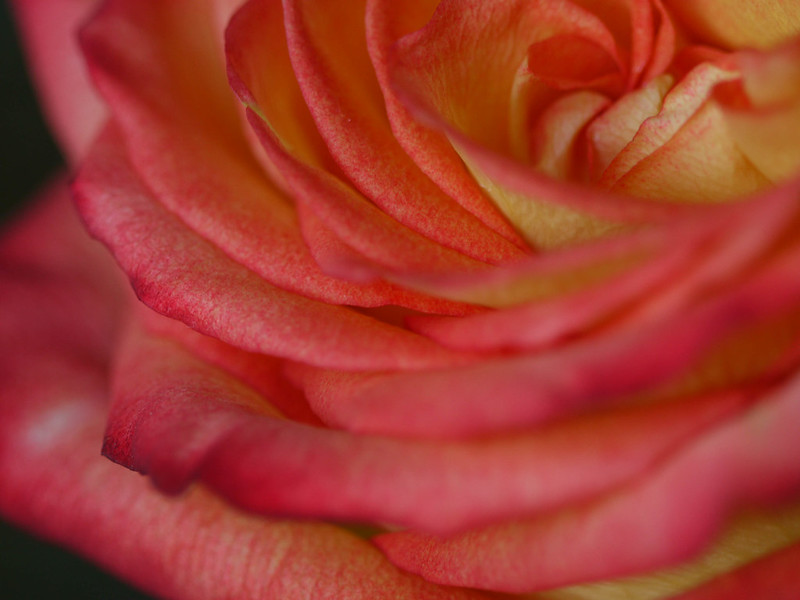
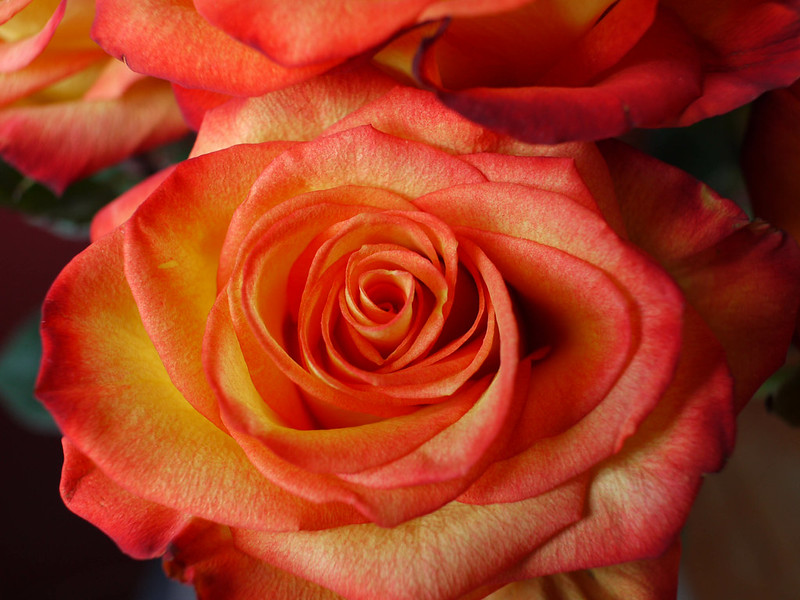
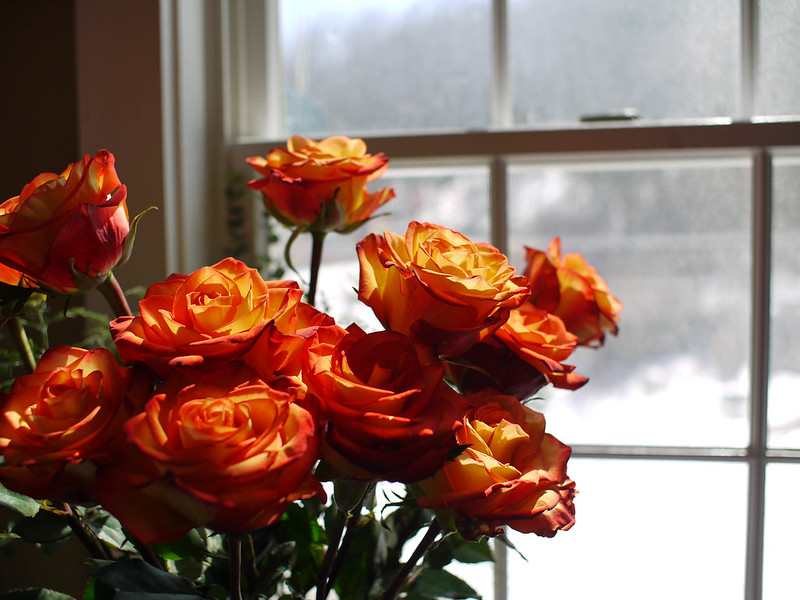
(Thank goodness, by the way, for trucks and airplanes that transport roses with flame-tipped petals from southern hot houses to the the mud-bound north.)

But yesterday we brought the hibernating garden hose out of the basement, attached it to the the outdoor spigot, and used it to fill the goats’ water tank. If that’s not a sign of spring, I don’t know what is.

This long, lingering winter’s left me fairly brittle. Slow to thaw. But this week I’m starting to unclench just a little, to unfurl. I’m not ready to bloom yet, but I felt the warm sun on my head yesterday, and I felt a softening where the ice has held fast.

The baby apple and pear trees, which were up to their throats in snow just two weeks ago, are covered with brown buds, potential blossoms, but there’s no sign yet of their opening (I check every day). Fairly soon, though, everything will be bursting into spring and we’ll be mowing the lawn and slapping at mosquitoes.

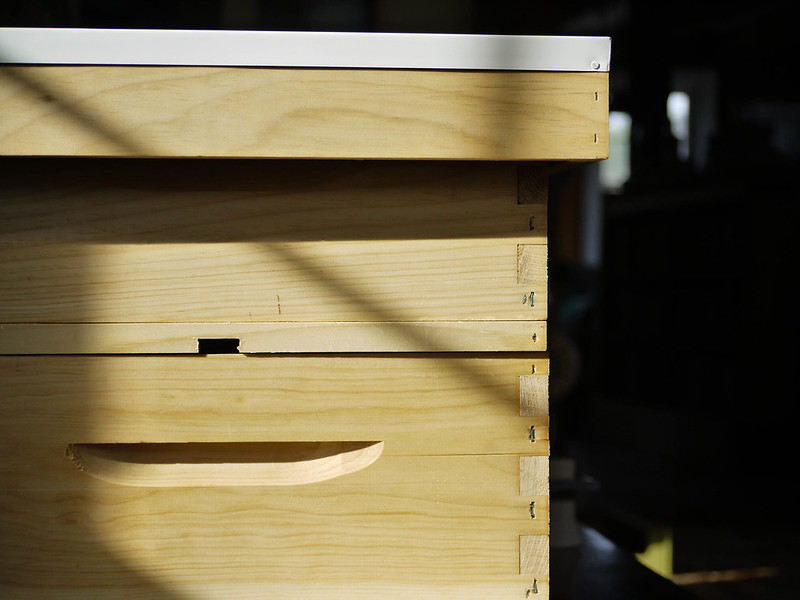
For my birthday this year, M & H gave me a beehive. And 10,000 bees and their queen. We bring the bees home on Saturday. Listen up, buds! You’d better start blooming. We’ve got some pollen and nectar to gather!

Hive

Smoker

Birthday roses

~~~~~~~~~~~~~

These photos and post are in response to this week’s theme for the 52 Photos Project. You should participate, too! Read about how it works here. You can see a gallery of everyone’s photos for this week’s theme here. To see a list of all my blog posts for this project, go here.