Hidden treasures

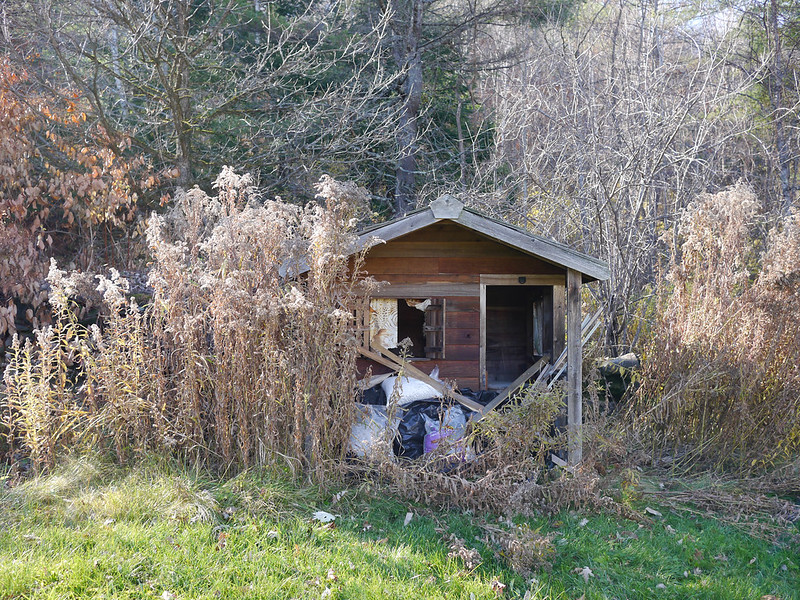
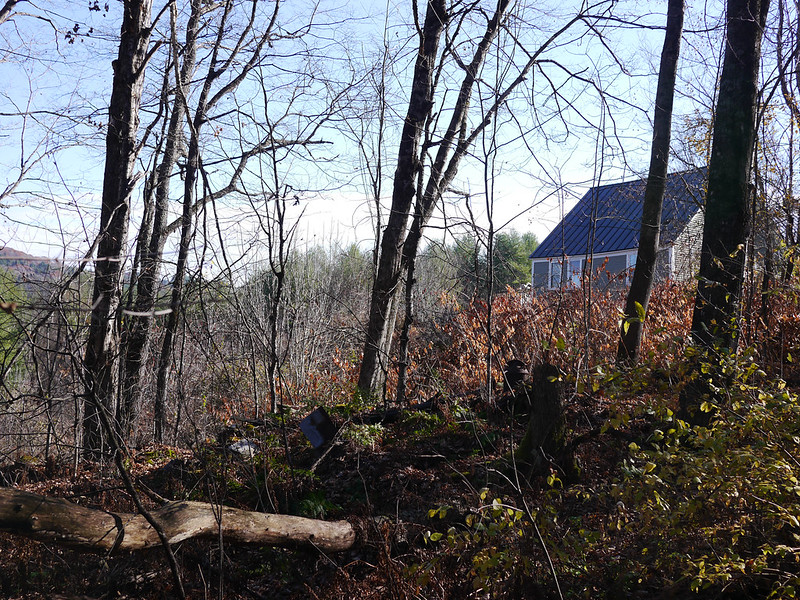
Little house

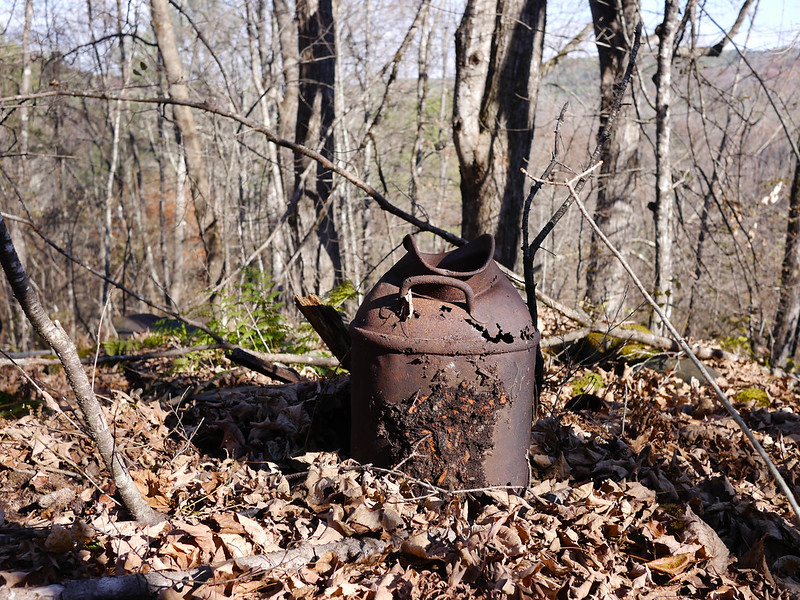
Milk can

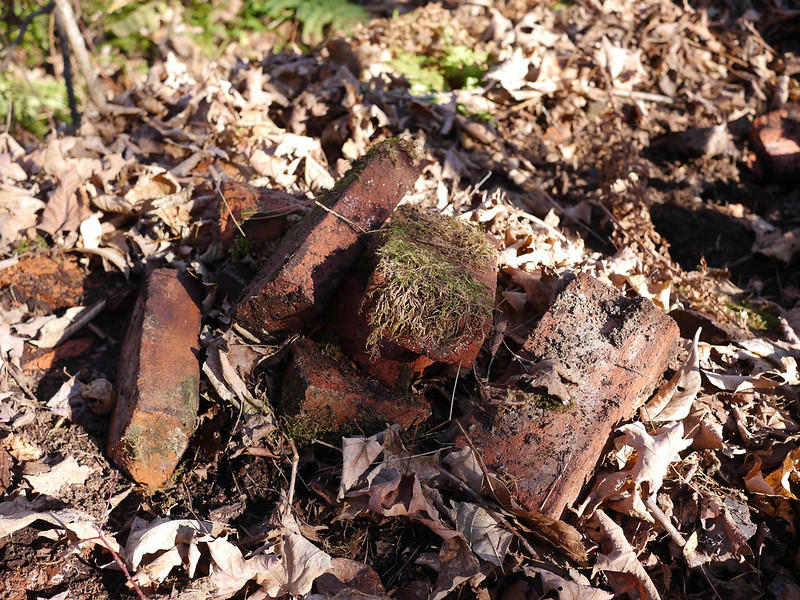
Old bricks

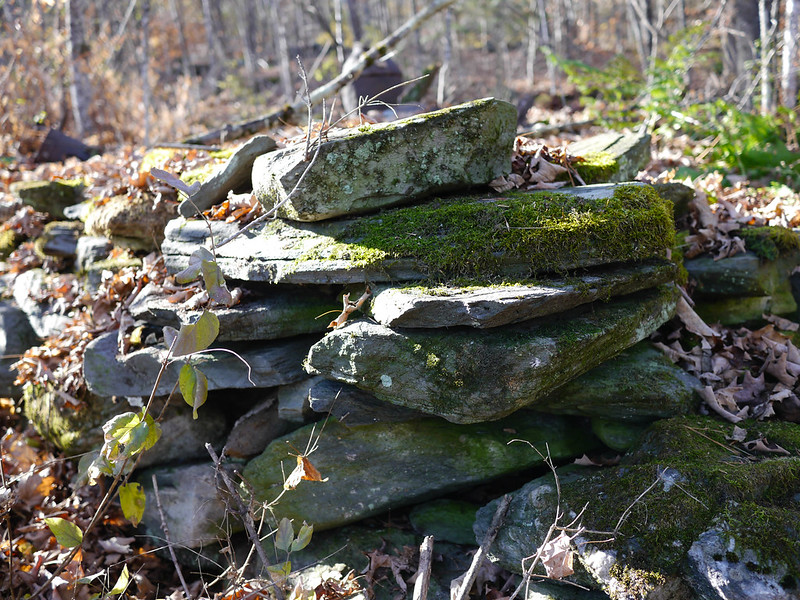
Old foundation

Hidden 2

Out of the blue, a month or so ago, a friend forwarded me an email, “Isn’t this the type of goat you have?”

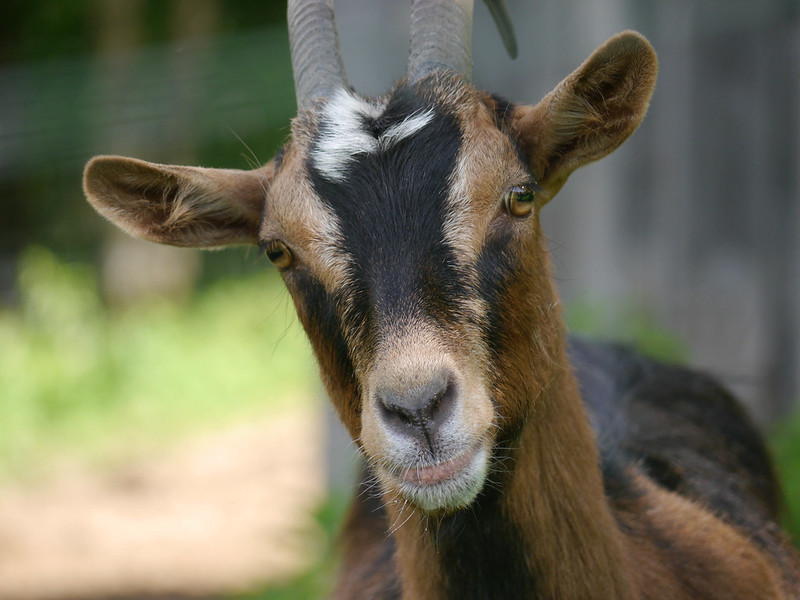
Her husband had been browsing craigslist and found for sale a purebred Guernsey buck. You might know that this is a very rare breed. There aren’t that many in this country (a handful, really), and our goats are part of the breeding program to establish an American version of the breed. Their rarity makes them very interesting to us, and it also presents breeding problems. In the past, we’ve trailered our girls on a four-hour (each way) excursion for breeding.

We hadn’t really considered getting a buck of our own because doing so entails all sorts of extra complications, like separate housing and fencing to keep the girls and boy apart until you want them to be together.

But, you know, a purebred Guernsey is a real find, especially one just a couple hours away from us.

So the wheels began to turn, creakily at first—there were some problems to solve—and then more rapidly and smoothly.

First, we have a small barn, perfectly sized for the herd we have now, but we’d need more space for kids in the spring. The obvious solution to that problem is also the difficult one: selling some goats. We’ve been through this once before, but we didn’t know if we’d find someone who wanted to buy goats this late in the year, when everyone is readying their own farms for winter.

But we got lucky and found good homes within a week for two does.

Next, we needed a place to house the buck separately, at least until the breeding was done and we relatively sure of conception dates. We’d need a shelter, and a sturdy fence.

So we called our favorite fence guy, and, whattaya know, he has a little room in his schedule in the next couple of weeks.

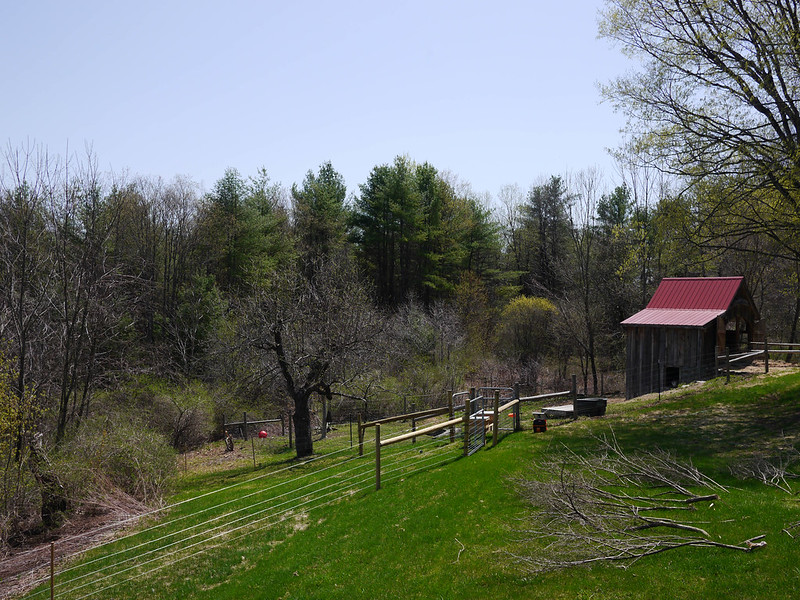
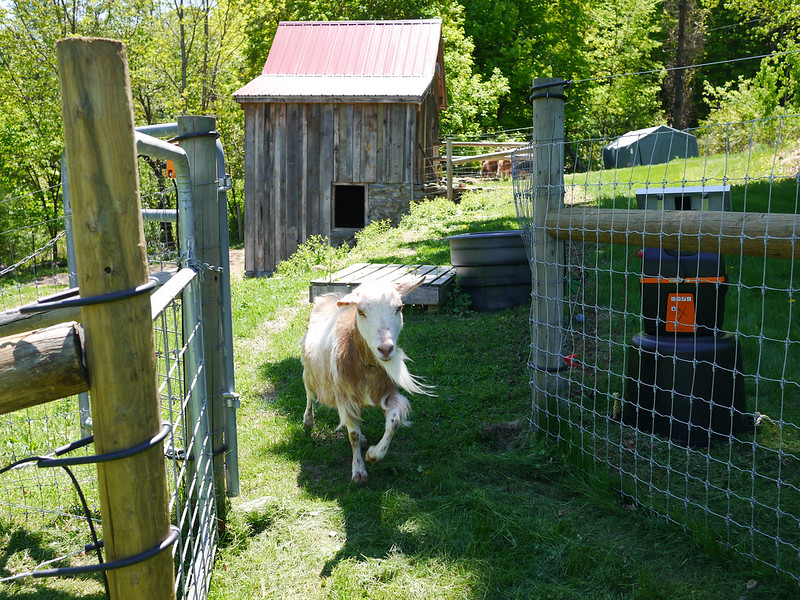
We called our friend Chip (you remember Chip, right? he of the fun earth-moving equipment?), and he had room in his schedule to visit us this morning. We showed him H’s old playhouse, sitting at the side of the yard, overgrown and forlorn, waiting for a new purpose (personally, my idea was to use it to house ducks, but you can’t have everything…).

It seemed sturdy enough after years of neglect. Yeah, he could move it down into the goat yard. Would Monday work for us?

We started talking about the wood-fired bread oven we want to build next spring. He started talking about his stone wall building experience. We went wandering together into the woods to the side of our house, an area we’ve barely explored in 21 years because it’s filled with all sorts of junk that the long ago owners threw there (typical of most old properties, decades before curbside trash collection and recycling centers existed). Old toilets? Check. Car parts? Check.

But Chip has an eye for hidden treasure, and within minutes we were uncovering antique bricks and perfectly shaped field stones for oven building.

Who knows what will happen with that project—spring feels ages away and, if we’re lucky, will be taken up with kidding and milking and cheesemaking—but this morning it felt like a lot of little things that were very mysterious and complicated were becoming a little clearer and a little easier.

How often does that happen?

So, in a little over a week, this lovely young man is going to come live with us. But we still have one major decison to make: what to name him.

GG

Pasture perfect

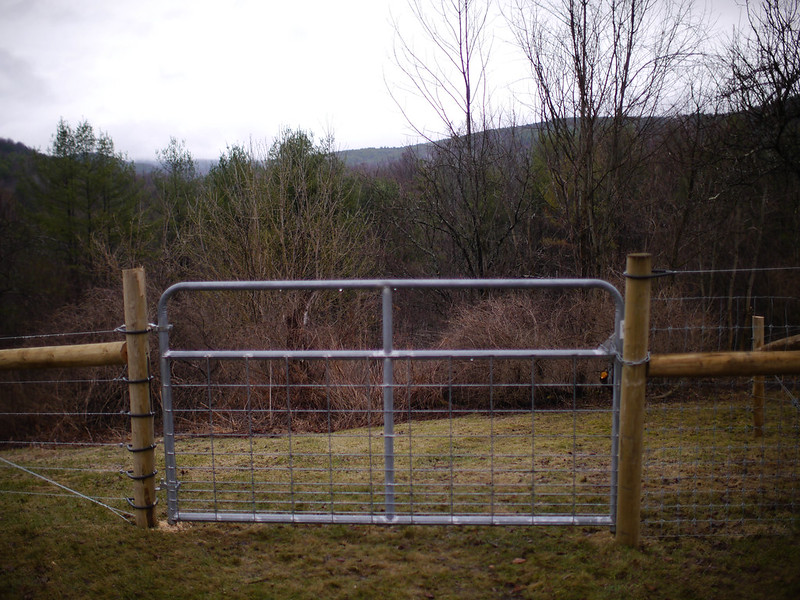
Gate

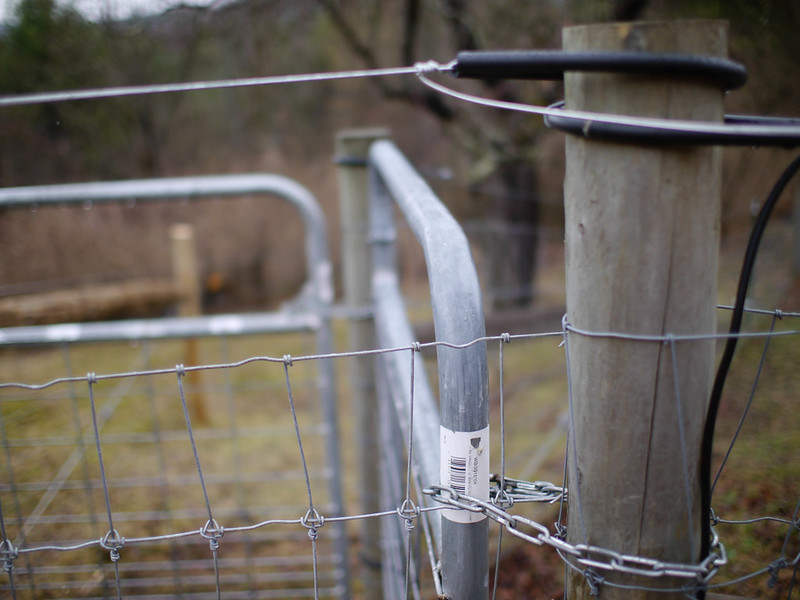
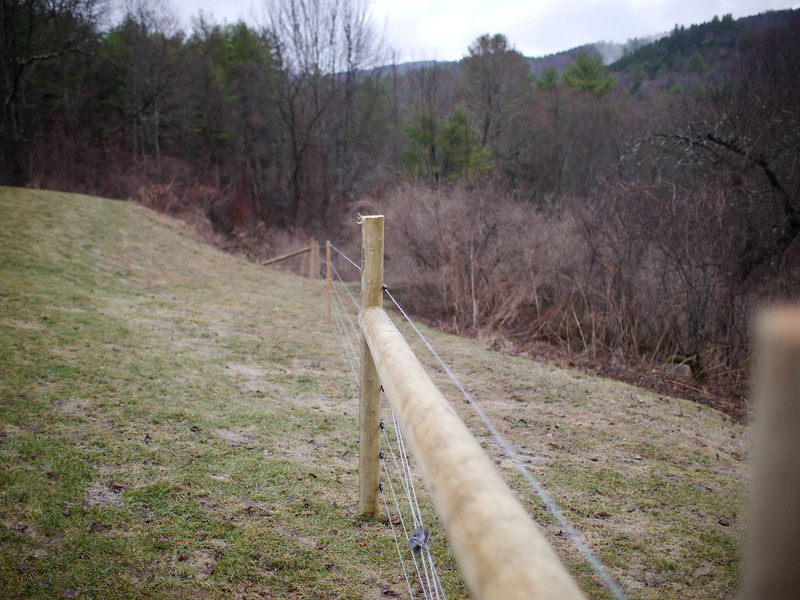
It took some time, as most good things do, but we finally expanded the goats’ pasture this spring by a large degree.

The three original goats came from what was essentially a dry lot—a spotlessly clean pen where they were fed a mixture of hays and other farmer-provided food year-round. They were healthy and gorgeous and knew nothing about eating the way goats were made to eat: browsing.

The pen we put them in when they arrived was fairly dry also because it was newly formed and nothing much was growing. We spread a bunch of meadow seed and, between that and nature, the pen grew a nice carpet of green stuff. The girls explored and gradually began to graze. When Willow was pregnant, she’d eat anything and became a champion nibbler of stinging nettle and burdock. Her sons followed her lead. Everyone else took note. Now they’re all champion grazers. But it’s still not browsing. Goats love woody, stemmy, leafy things that grow tall, above their heads.

Also, it’s always bothered me that they were penned. Caged. I know we can’t just let them roam the valley. They’ll get lost or hurt or eaten. It’s just not feasible. They have a really nice pen. A really nice barn. They have most everything a goat would want. Sure, they don’t have a tower, but you can’t have everything, right?

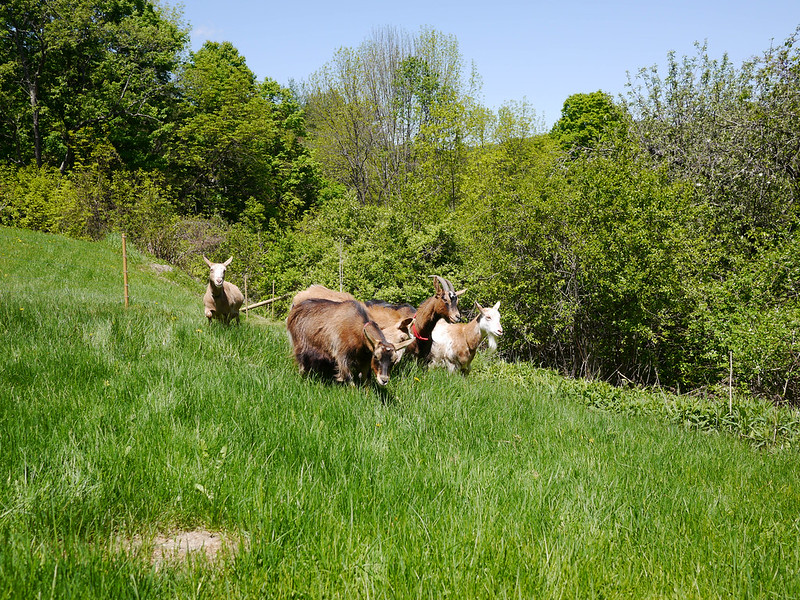
But now they have a pasture. Room to explore. Room to get lost in. Room to get away from each other if they wanted it.

I think it’s actually a bit intimidating for them in a way, and, let’s face it, a lot more work than just lounging around the barn, waiting for us to deliver the hay, but they’re out there, exploring, nibbling, stretching their necks to reach for a tantalizing leaf, just the way the goats are supposed to do. We can’t wait to see how this affects the milk and cheese.

For now, it’s just a pleasure to watch them wandering into the brush, tasting and savoring, and then napping in the tall grass. And when I go into the pasture with them, we’re still a herd together, exploring.

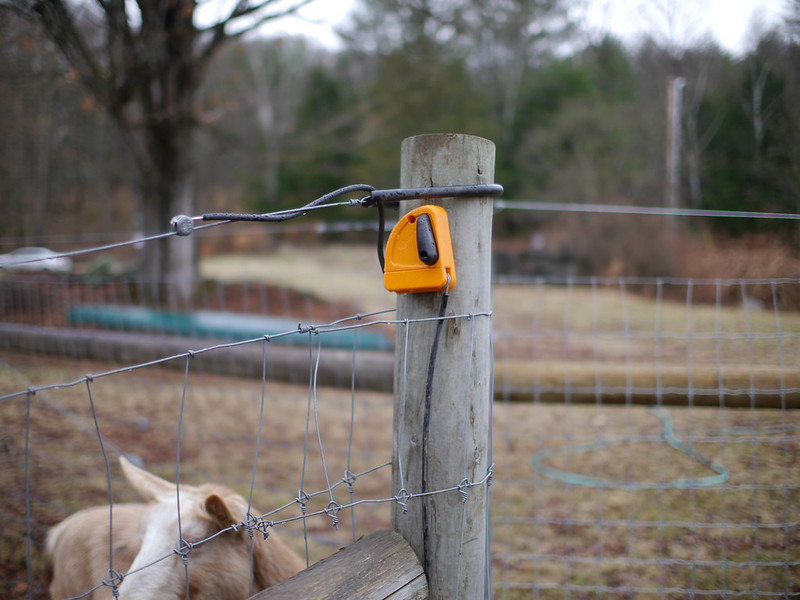
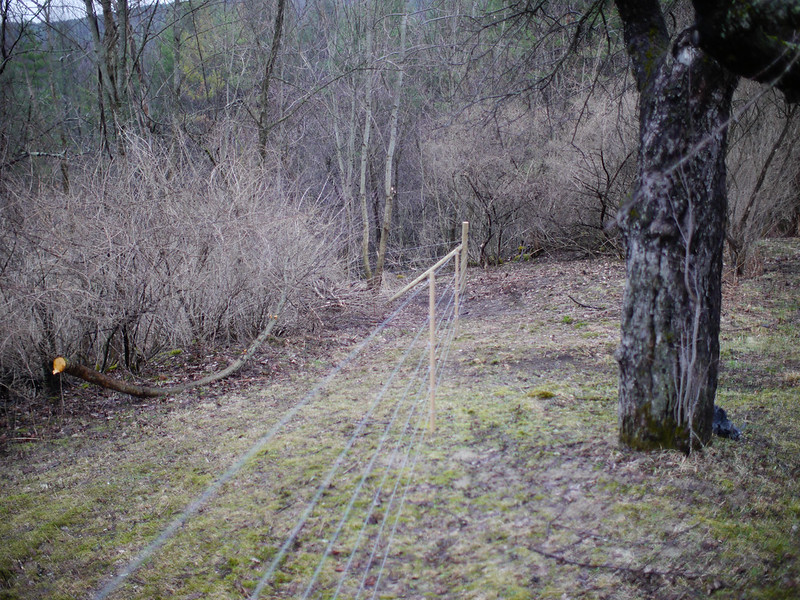
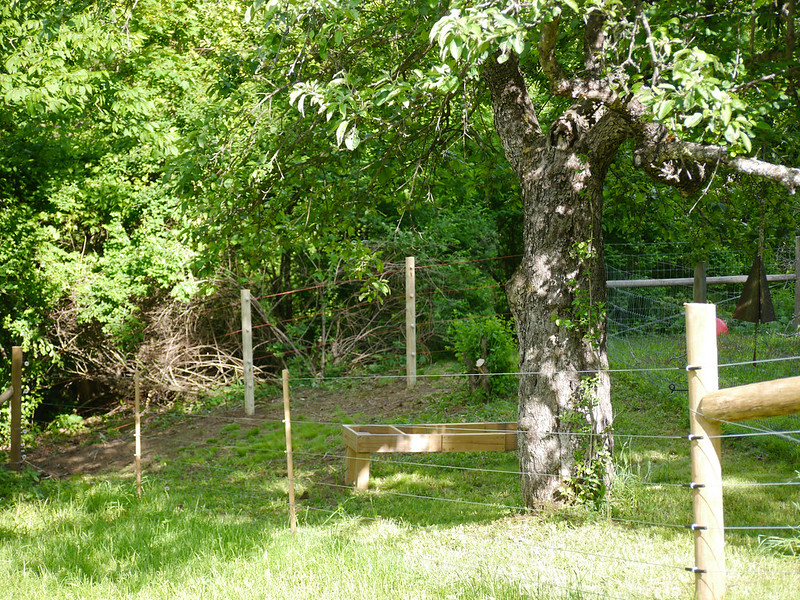
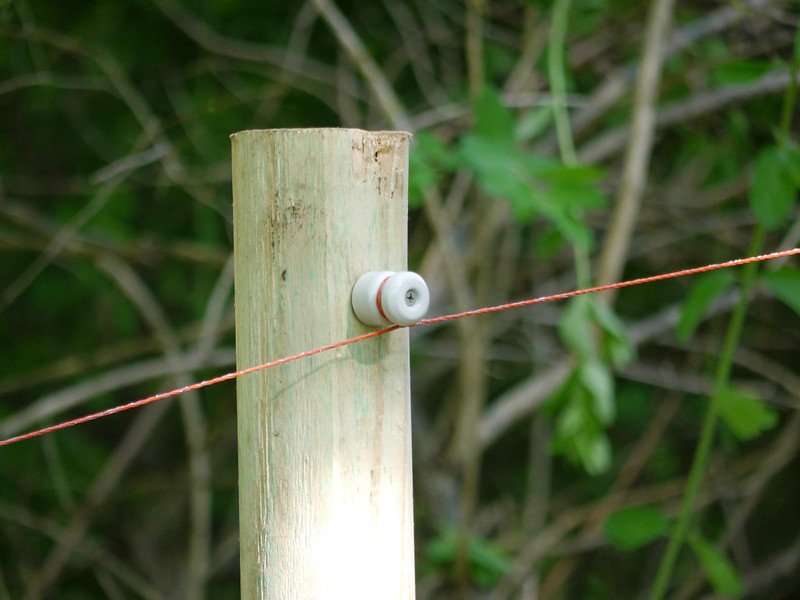
p.s. The addition of the new fence gave us a new little “pocket” of space between the existing pen and the new pasture. M did some mental figuring and bought some fence posts. We spent Saturday clearing out a new fence line, digging post holes, and stringing some polywire between the two fences. Now we have a new enclosed bee yard, surrounded by electric fencing. Will it be enough to dissuade a bear? We’ll find out soon. We bring the new bees home tomorrow.

Complication

New line

Switch

Borderline

Altered view

New fence line

Brave Westie

New digs

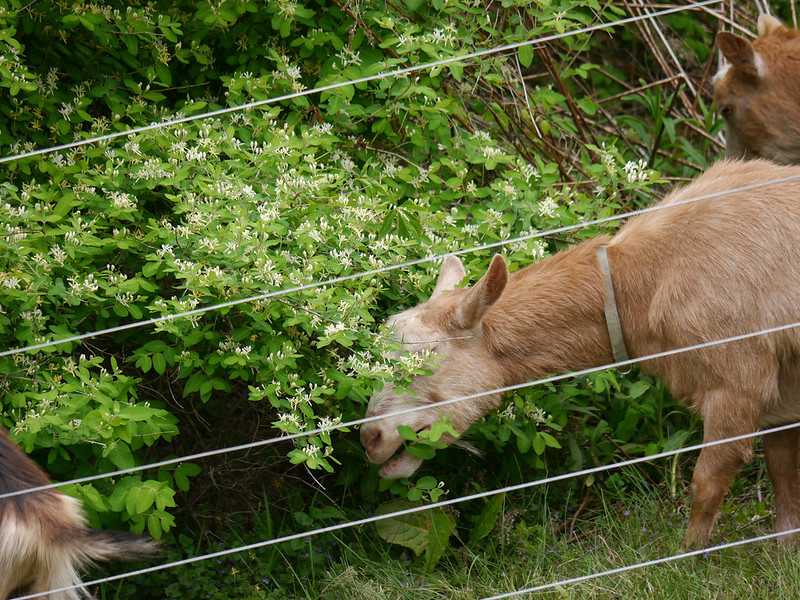
First nibbles

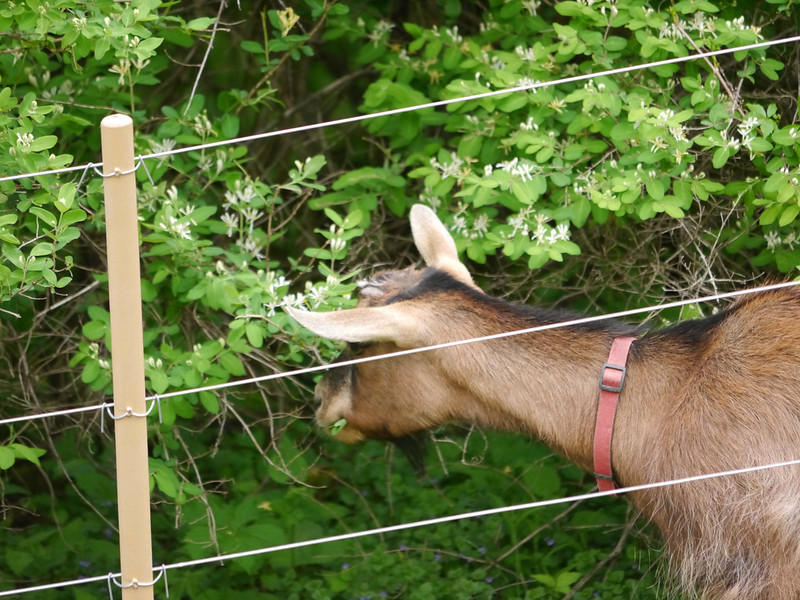
Willow vs. honeysuckle

Bear proof?

Fragile

Doris watches

Goat home improvement

Walk right in

I’ve spent the last two days in the land of pie: first shopping for their ingredients, then making them (pear-cranberry, peanut butter-chocolate, and good ol’ apple), then delivering all but the apple (that one’s ours) to the school’s language trip fundraiser (where the pies were to be sold), then driving H to the aforementioned fundraiser, then returning later myself to help clean up from the same.

In between, there was house cleaning and laundry folding and grocery shopping and wood moving and dish doing and right now my fingers aren’t much interested in typing. They’re more interested in curling up beside me as I watch a movie or stare into the fire.

Continue reading “Goat home improvement”

Briefly, about the names

Stop moving so quickly, you blurry girls!

Long way down?

At the risk of boring you with baby goat blather, here’s just one more. Then I’ll be quiet. I’ll try. Really.

I just wanted to take a second to explain the origin of the names since a few people have asked.

First of all, we are following the convention that many goat breeders use, which is to choose names that begin with a specific letter of the alphabet. The letter changes every year, advancing in alphabetical order. This year’s letter is “D” (last year’s was “C”, next year’s is “E”. You see how it works…). Our does were all born in 2006, a “W” year.

We had a lot of “D” ideas (including “Doctor Who”), but it turns out it was fairly easy to name the doelings once we met them.

Doris Maurice (Dory)

Dory learning to climb

Wellesley and Dory

Dory’s name comes from one of our favorite essays by Alan Coren, about the brutal reality of returning home after a two-week sailing trip in Greece and finding that the housekeeper has abandoned the house and pets.

Get to fishing pond, three fish floating in it, belly-up and covered in white spores; suddenly, oh my God, remember Doris Maurice! Doris Maurice is tortoise, so-christened by four-year-old son since no-one knew whether it Doris or Maurice, tortoise-sexing not being family talent, go to tortoise-run behind greenhouse, discover matter of sex purely academic now, as Doris Maurice look extremely deceased. Rotten housekeeper, tortoise needs water daily, pick up Doris Maurice, little legs stay outside shell, no panicky withdrawal, look at little face, Doris Maurice dead as doornail.

–Alan Coren, from “Will Ye No Come Back Again?”, The Best of Alan Coren, Copyright © 1980 by Alan Coren

What can I say? It’s a sad ending for poor Doris Maurice (which we’ve always pronounced as “Doris Morris”), but the writing is hilariously harried and exasperated. We’ve laughed about it for years, and the name “Doris Maurice” just makes us smile.

Doris, or Dory, she is. But we will keep her well fed and watered.

Darcy

Darcy

Partly named for Mr. Darcy in Pride and Prejudice, and partly for the song “Darcy Farrow”, an old favorite from John Denver’s Rocky Mountain High album, which I listened to fairly obsessively when I was kid. The song is another bit of sadness (we do tend to like the sad songs and stories around here), but it’s also beautiful, and delicate, just like Darcy herself.

[youtube https://www.youtube.com/watch?v=A3VgSOYsUBo]

Today, D & D are one week old and they’re bouncing around the barn and goat yard, testing their springy legs, exploring every corner, claiming every rock peak as their own Everests. The other day, I saw Darcy chasing Lars, the three-year-old wether, up the hill. I think they’re pretty well settled in to the place.

After a year+ break, we’re back to milking (just a bit right now, to help relieve some pressure from the side of Wellesley’s udder that the babies aren’t nursing from yet), and we made our first batch of cheese today. It’s busy, and all kind of wonderful.

Golden (Guernsey) Friday

It’s the day after Thanksgiving and what did we do? Drove two goats to upstate New York, of course. We’re traditionalists.

About a year ago, we dried off our milking goat, Willow, to give us all a bit of a rest. The plan was to breed a couple of our does again this Fall to start the milk flowing and to make progress on the Guernsey breeding program. Since there are no other Guernseys that we’re aware of in New England, we had to search around a bit for a suitable buck that was within driving distance.

Luckily, the breeder from whom we bought our girls told us about a couple goat farmers who have a buck in upstate New York. So we took a visit to their farm this summer and fell in love with handsome Brady.

Brady

He’s a charmer, isn’t he?

His owners, Bailey and Thomas, showed us around their huge farm. Goats, pigs, sheep, poultry of all varieties, cats. We hit it off right away with Bailey and Thomas, and loved all the work they’d done on the farm and the care they gave their animals.

Giant willow

The kids

Guernseys

After the tour, they fed us a wonderful lunch made from the bounty of their garden. We sat outside at the picnic table, watching the goats, and talking about farms and goats and cheese. You know: the important stuff.

After meeting Bailey and Thomas and their goats, we were sure we wanted to breed our goats with Brady, but their farm, though far closer than any of the alternatives, is still nearly four away from us. And here we were without truck or trailer.

Until, through the magic of the Internet, we found this tidy little trailer that would do the job.

New wheels

We prepared the trailer by painting it inside, covering sharp screw ends that the goats might bump against, adding air vents, duct taping a plastic tarp on the floor, and then laying down a layer of soft hay for bedding.

Trailer vents

We prepared the lucky girls by letting them sniff the “buck rag” that Brady mailed them earlier this Fall.

From Brady with Love

All of which led to today, when we coaxed Wellesley and Westwind into the trailer. With just the incentive of a handful of grain, Wellesely hopped right in. Westwind followed Wellesley without hesitation.

Westie stroll

Westie and Wells

We had a perfect, blue-sky day, warm and clear, and the goats tolerated the drive well. When we stopped at Bailey and Thomas’ farm, we found Wellesley lying down in the trailer, looking quite relaxed, and Westwind was up, sniffing the new scents through the air vents.

Maybe they could smell Brady?

We settled them in to their new stall and gave them reassuring head scratches and a banana snack, then went to see Brady one more time before we got back into the car for the trip home.

The girls will spend the next few weeks in New York, getting some time with Brady, before we fetch them home.

For now, we’re down to three goats around here. With any luck, next April will bring us the first buds on our new apple trees, and a few golden doelings springing in the goat yard.

Brady

Goats and yaks

Two videos from yesterday.

Golden Guernsey goats at play at Spitalfields City Farm in London:

[youtube=http://www.youtube.com/watch?v=psszqX1LITQ]

These are the type of goats we have our hearts set on. Unfortunately, they are a rare breed, originating in England, and can’t be imported to the US. Southwind Farm, which boasts the only purebred Golden Guernsey herd in the US, claims on their web site that there are only 11 purebred females in the United States. Fortunately, there’s a group of people working on developing both a British and an American Golden Guernsey breed, by crossing purebred GG bucks with high-quality Alpine and Swiss does. The aim is to “breed up” to as pure a GG bloodline as possible.

Also, here’s video of a newborn yak at Steadfast Farm in Waitsfield, VT (possibly New England’s first yak herd):

[youtube=http://www.youtube.com/watch?v=sdFcu0GvHnc]

We love yaks. What’s not to love? They’re shaggy, and they grunt. We have not yet made yak cheese, but believe me, we intend to try.