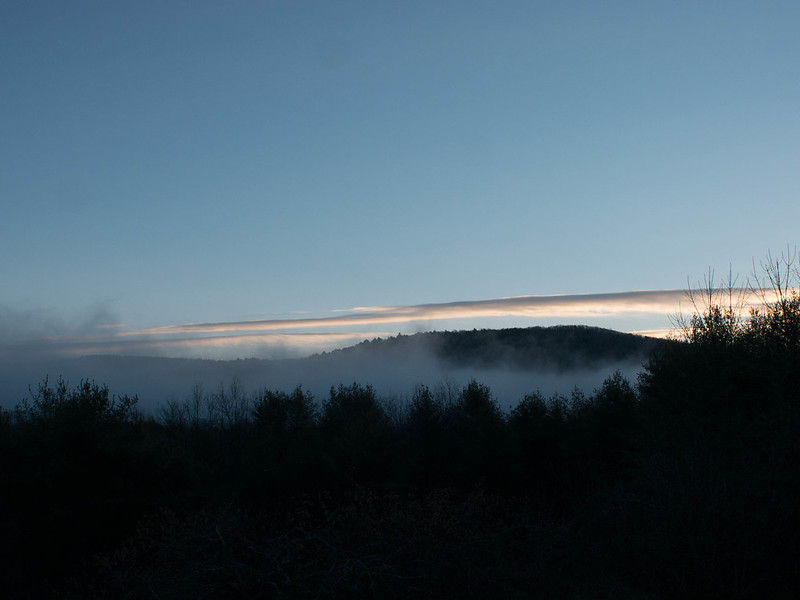
Winter comes to November

Line

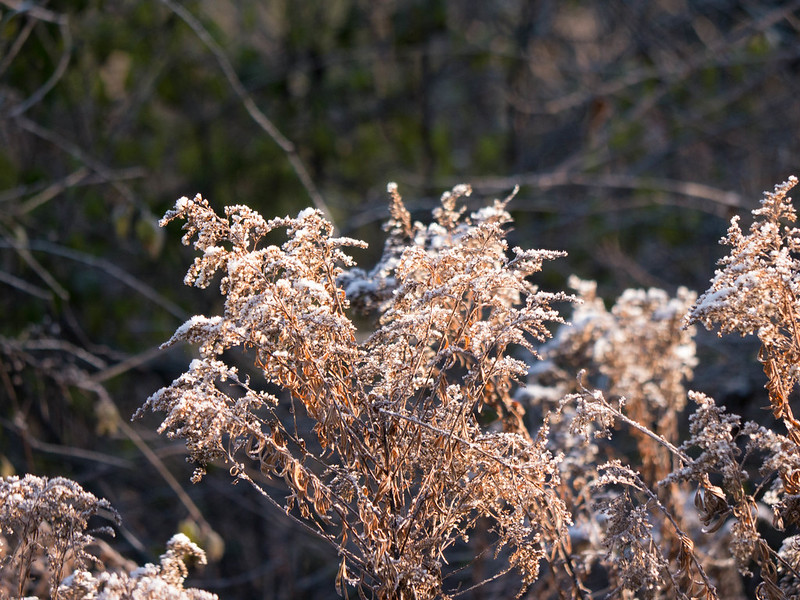
Fur

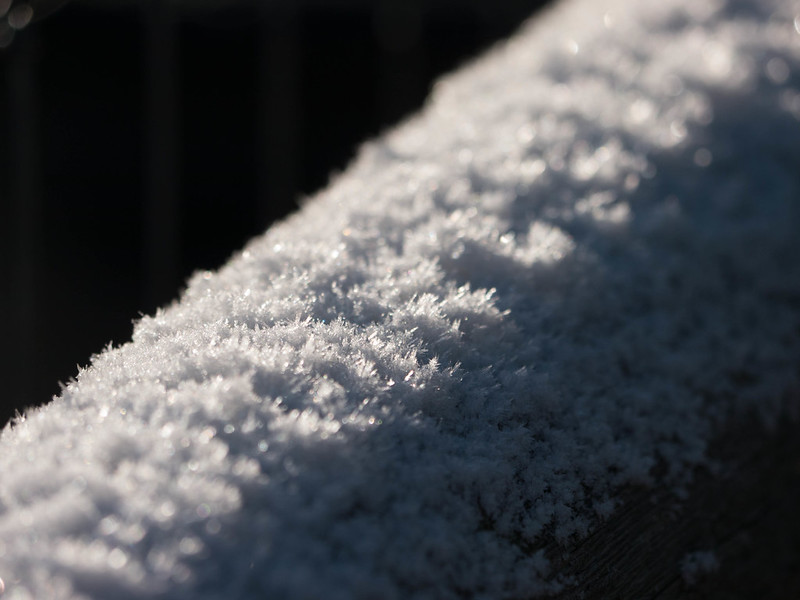
First dusting

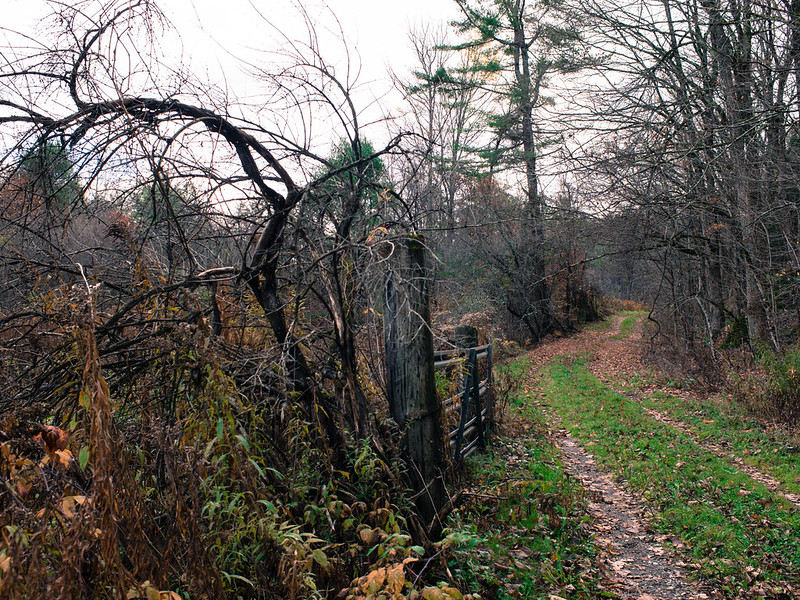
Worth it

Falling Leaves and Early Snow

In the years to come they will say,
“They fell like the leaves
In the autumn of nineteen thirty-nine.”
November has come to the forest,
To the meadows where we picked the cyclamen.
The year fades with the white frost
On the brown sedge in the hazy meadows,
Where the deer tracks were black in the morning.
Ice forms in the shadows;
Disheveled maples hang over the water;
Deep gold sunlight glistens on the shrunken stream.
Somnolent trout move through pillars of brown and gold.
The yellow maple leaves eddy above them,
The glittering leaves of the cottonwood,
The olive, velvety alder leaves,
The scarlet dogwood leaves,
Most poignant of all.

In the afternoon thin blades of cloud
Move over the mountains;
The storm clouds follow them;
Fine rain falls without wind.
The forest is filled with wet resonant silence.
When the rain pauses the clouds
Cling to the cliffs and the waterfalls.
In the evening the wind changes;
Snow falls in the sunset.
We stand in the snowy twilight
And watch the moon rise in a breach of cloud.
Between the black pines lie narrow bands of moonlight,
Glimmering with floating snow.
An owl cries in the sifting darkness.
The moon has a sheen like a glacier.

–Kenneth Rexroth, from The Collected Shorter Poems. Copyright © 1940

How about November?

End of October

“How about November?” asks poet Mary Ruefle (in her lecture “On Secrets”) when, every April, she’s asked to contribute to a poetry reading in recognition of National Poetry Month.

April’s been crowned the month of poetry, but what does April need with poems? April is her own poem, all hopeful, beckoning and unfurling.

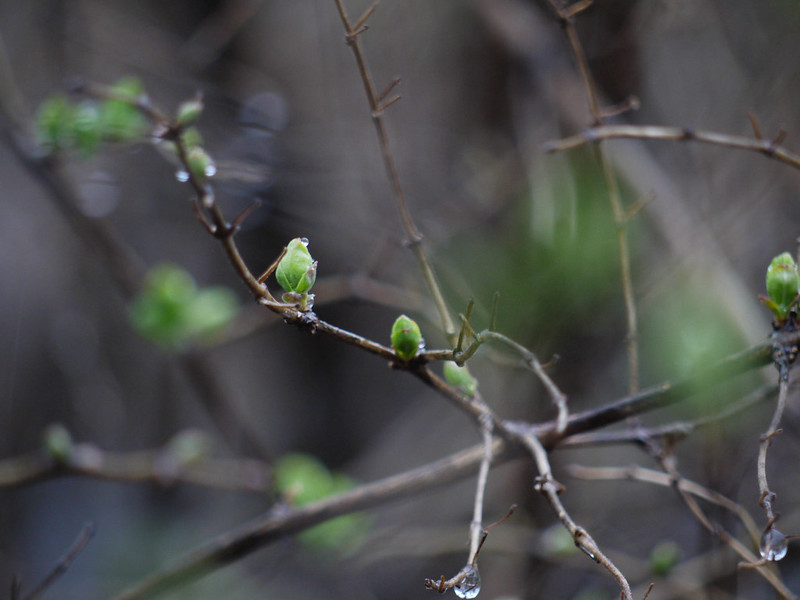
Curl

Poetry in April feels almost superfluous, a bit embarrassing, a gilded excess.

Poetry, Mary Ruefle says in that same lecture, is “clearly rooted in obscurity, in secretiveness, in incantation, in spells that must at once invoke and protect, tell the secret and keep it.”

What she and we know is the wonderful trick about a poem (and a November): while its secrets and spells seem hidden at first, they are unlockable, releasable.

Sit with a thick poem. Sit with a dark November day.

Say the poem out loud. Say the day out loud.

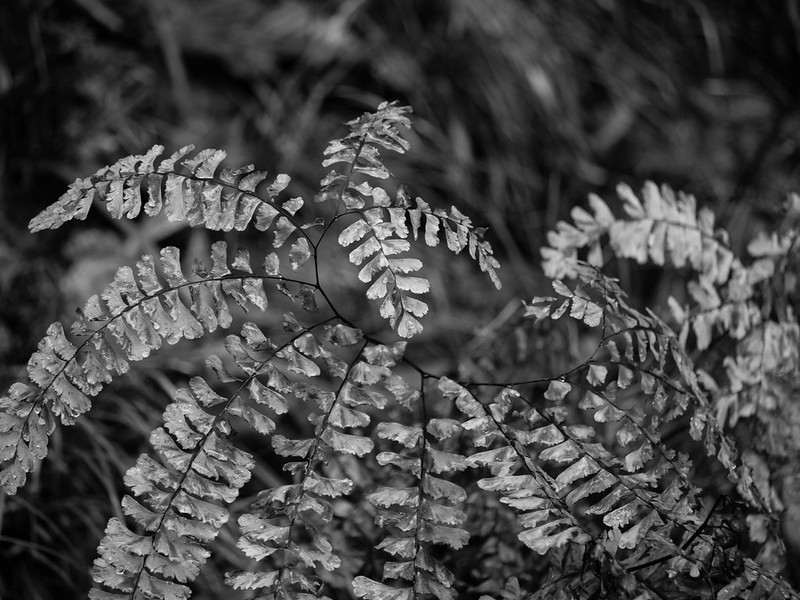
Notice its rhythms. Its shades of ochre. The times the sun rises and sets. The length of its lines. The bright green fur of moss along the ridge of a rain soaked log. The crunch of tires on gravel. The one bird on the one branch. The half rhymes in the alternating lines.

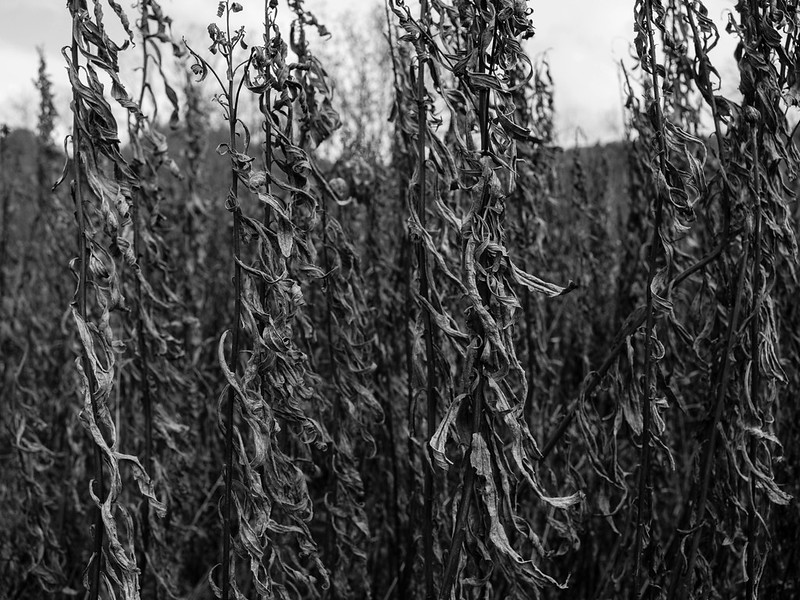
Isn’t there as much poetry in November’s dying hay field as in April’s burbling brooks?

Height

Thomas Hardy knew it as well as anyone. Life is hard, literature is bleak, and there’s a poem in that.

“A Saturday afternoon in November was approaching the time of twilight, and the vast tract of unenclosed wild known as Egdon Heath embrowned itself moment by moment. Overhead the hollow stretch of whitish cloud shutting out the sky was as a tent which had the whole heath for its floor.”

We know it in our bones. And here we are, listening for what poems November will tell us. And the ones we’ll tell it.

Exploding

52 Photos ~ The light arrived

The light arrived

Doris photo bomb

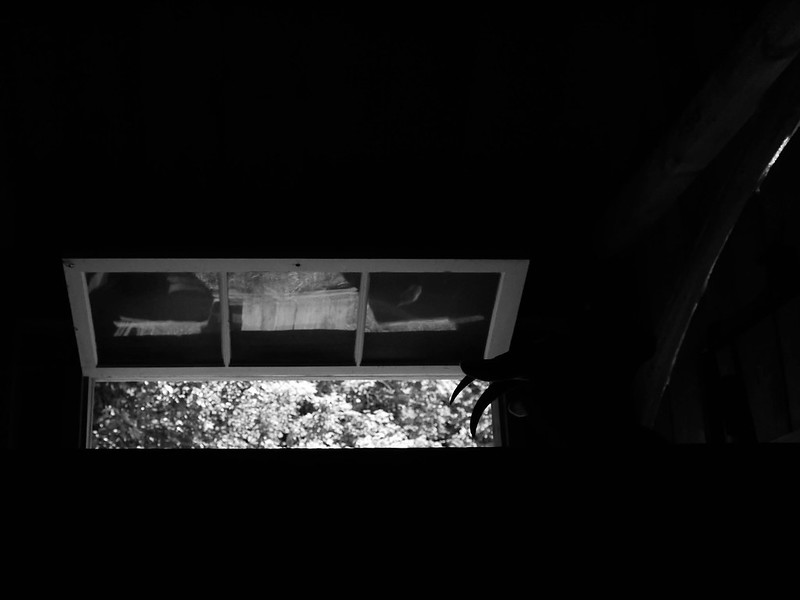
East-facing window

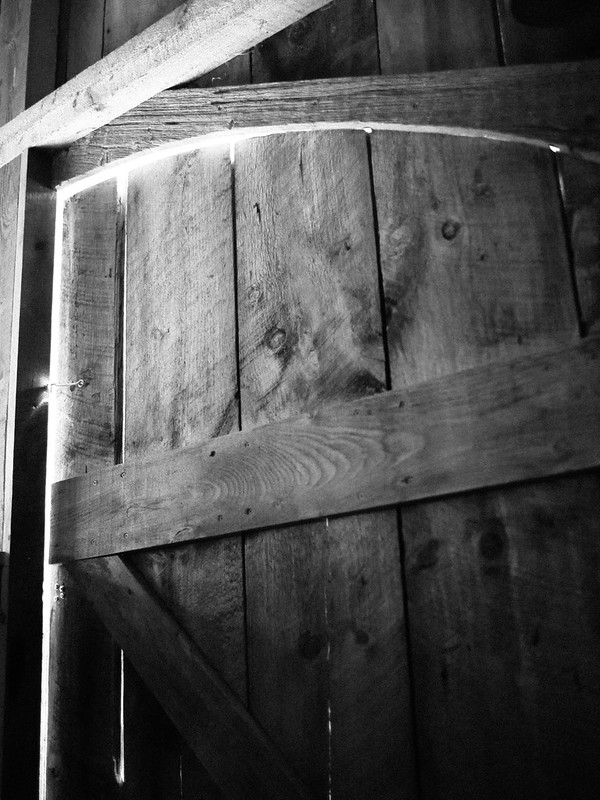
West-facing door

Burnt Norton – IV

Time and the bell have buried the day,
the black cloud carries the sun away.
Will the sunflower turn to us, will the clematis
Stray down, bend to us; tendril and spray
Clutch and cling?
Chill
Fingers of yew be curled
Down on us? After the kingfisher’s wing
Has answered light to light, and is silent, the light is still
At the still point of the turning world.

–T.S. Eliot, from The Four Quartets

~~~~~~~~~~~~~
These photos and post are in response to this week’s theme for the 52 Photos Project. You can see a gallery of everyone’s photos for this week’s theme here. To see a list of all my blog posts for this project, go here.

Friday diary

Dear Diary,

I was on my way from the computer to the poetry shelf to look up a Jane Kenyon poem (because today’s her birthday and we need to celebrate with some poems) and, by the time I got to the threshold of the next room, I’d forgotten why I was going.

I remembered on my way back here, and now I think I’d better write a few things down before I forget to mention them.

For instance, Hyla was in a show last week! Her school performed The Drowsy Chaperone, a musical satire of 1920s musicals. It was just plain fun. The staging, dancing, singing were all impressive, and we laughed a lot. I didn’t take any photos, but our local town photographer took about 1000. You can see H as ‘Trix the Aviatrix here, and here, and here.

I also need to tell you that, after longing for them for years, we finally got blueberry bushes. Eight of the lovely things. And I spent the Saturday of Mother’s Day weekend swearing as I dug holes in New England soil that is more rock than dirt, fertilizing the holes, planting the bushes, mulching the bushes, watering the bushes, and then… sitting on the grass and loving the way they looked. Mom loved blueberries. Planting them was the second best way to celebrate Mother’s Day with her.

Blueberry bushes

As we were choosing the plants at the local nursery, M (rightly so) argued for splurging on the larger bushes. We’re not getting any younger; we’d like to harvest some blueberries sooner rather than later. But our friend at the nursery said we just had to get one of the Elliot variety, and they were only available in the small size, so we have one tiny bush. His name, of course, is Elliot, and he’s very excited about everything. A new morning. The sunshine. A rain shower.
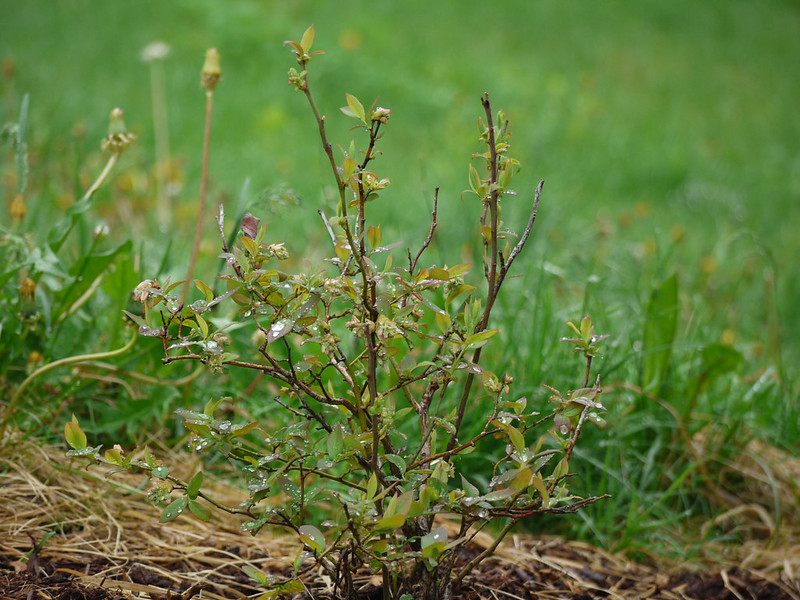
Elliot

He and I were both excited when a hummingbird came by to visit.

Shy blueberry bush visitor

Big, round bumblebees have been visiting the blueberry bushes, too, and so have honeybees. I like to think they’re “our” bees, but who knows. They refuse to wear the name tags I made for them.

The bushes are right outside the window next to my desk, the same window from which I can see the goat barn and the beehive. I spend a lot of time looking out that window at the micro farm we’ve been carving out of this property, inch by inch. And it’s a soul satisfying view this time of year, with the big maple tree suddenly in full leaf, the apple and pear trees we planted last year bursting with white and pink blossoms, the goats stretched out on the grass in their pen, soaking in the sunshine, the bees too-ing and fro-ing from the hive.

It’s enough to distract a person from the business at hand.

Today’s business involves preparing for this weekend’s big event, the (now) annual Open Fields School Medieval Festival. If you’re reading this and you live in the area, you should come. Not only does it support a lovely independent elementary school, it’s just plain fun. There are crafts to do, shows to watch, costumes to wear, and food to eat.

So far, I’ve made dozens of mini fruit tarts. And mini quiches. And our own Sweet Lolo came up last weekend and made caramel “styckes” and pine nut candy to donate to the cause.

Today I’ll make one more batch of quiche, and a couple batches of waffle cookies, and then H and I will go over to the school this afternoon to help set up the tents and fences and banners in preparation for tomorrow.

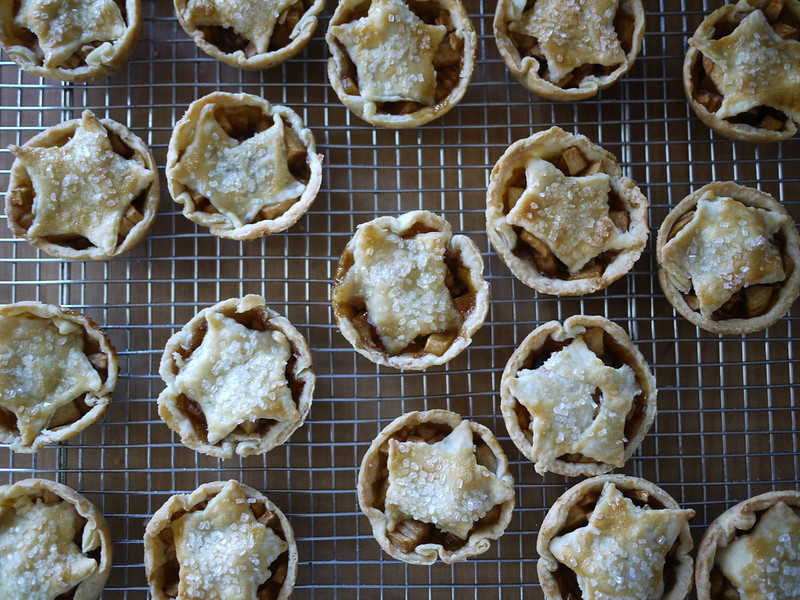
Mini rhubarb-ginger tarts

Mini apple tarts

Tomorrow, we’ll put on our Medieval costumes and walk the green in the rain and the sun, watching the kids in the parade with Benny the Dragon and the King and the Queen.

Tomorrow, H will once again be the “Sniggler” who sells “eels” (of the candy gummy variety) to the children.

Tomorrow, M will be in his hermit cave, dispensing advice and answering your questions.
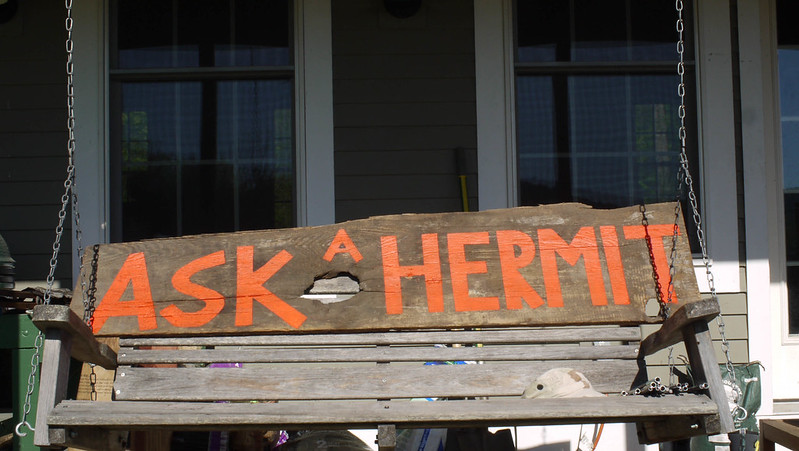
Ask a Hermit

But today, Diary, I have to get cracking. Treats to bake, costumes to dig out of last year’s storage, anti-rain dances to do (at least let’s not have snow, like we did last year, please), oh, and Jane’s poems to read.

Your friend,
-R

Song

An oriole sings from the hedge
and in the hotel kitchen
the chef sweetens cream for pastries.
Far off, lightning and thunder agree
to join us for a few days
here in the valley. How lucky we are
to be holding hands on a porch
in the country. But even this
is not the joy that trembles
under every leaf and tongue.

–Jane Kenyon, from The Boat of Quiet Hours, Copyright © 1986, by Jane Kenyon
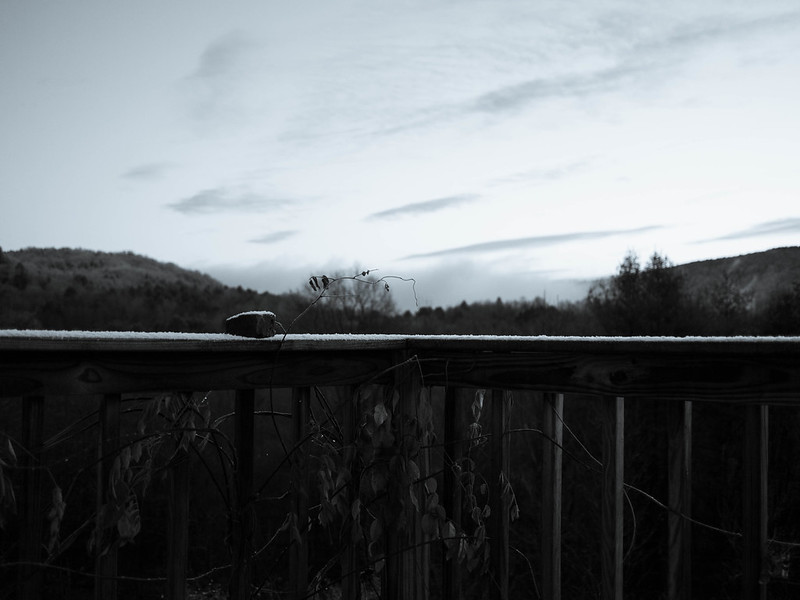
52 Photos ~ Criss Cross

Nest

Nest

I walked out, and the nest
was already there by the step. Woven basket
of a saint
sent back to life as a bird
who proceeded to make
a mess of things. Wind
right through it, and any eggs
long vanished. But in my hand it was
intricate pleasure, even the thorny reeds
softened in the weave. And the fading
leaf mold, hardly
itself anymore, merely a trick
of light, if light
can be tricked. Deep in a life
is another life. I walked out, the nest
already by the step.

–Marianne Boruch, Copyright © 1996 by Marianne Boruch

~~~~~~~~~~~~~
This photo and post are in response to this week’s theme for the 52 Photos Project. You can see a gallery of everyone’s photos for this week’s theme here. To see a list of all my blog posts for this project, go here.

Open to the rain and flowers

Wind and rain

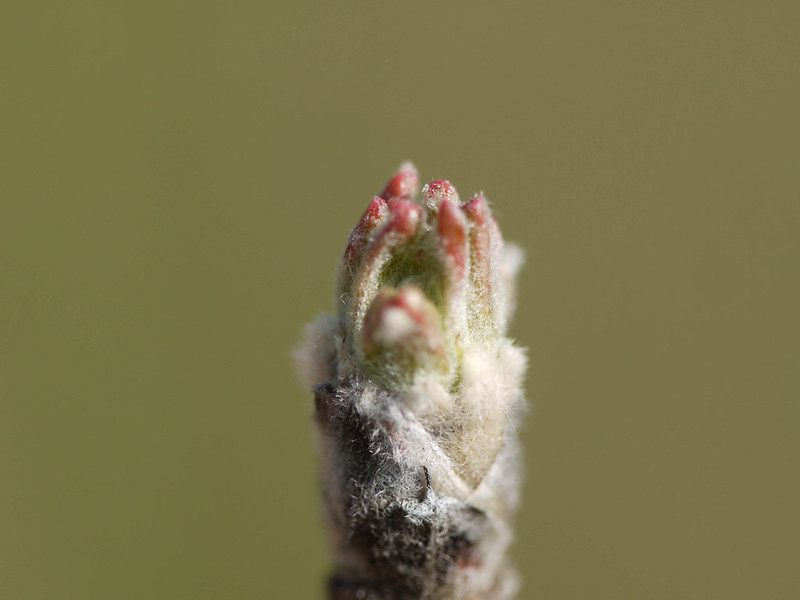
Crabapple buds

Golden Russet bud

What happened between the time that poetry month started and now is that spring arrived. The piles of snow are long gone. The birds are raising a ruckus at dawn and dusk. There’s a bird at twilight whose call is a creaking thing, like a complaint, or an unoiled door hinge. We don’t know what that bird is, but we enjoy making its noise back to it. A conversation for us, if not for him or her.

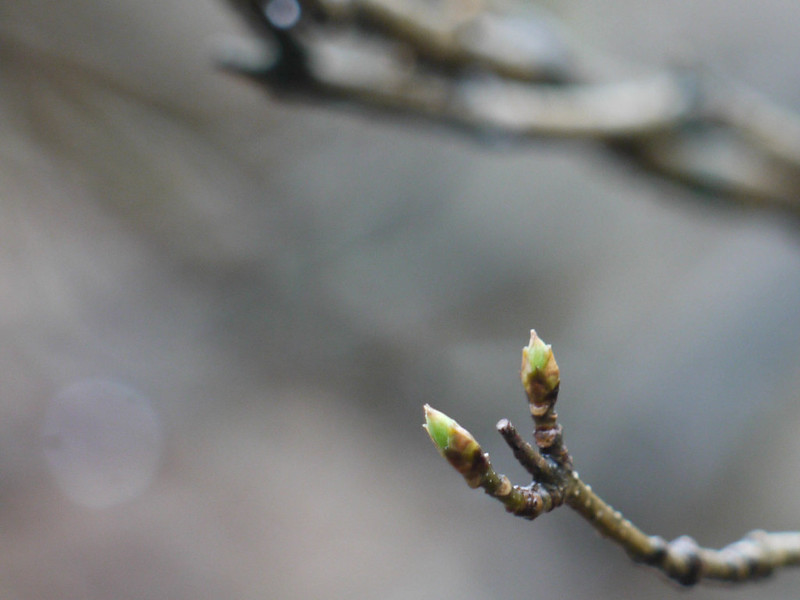
What happened is that the brown buds on the fruit trees have turned furry and are peeling themselves open to reveal pink. Spring is coming slowly, as it should, and the blooms are pacing themselves accordingly.

What happened is that I’ve been basking in poems every day and spinning lines in my head, and sometimes even scribbling them down in my notebook. These are blooming slowly, too.

What happened is someone long from home finally returned to where she should be.

What happened is, on a spring evening, there were three of us, driving on a road parallel to the river just after dark, music on the stereo, and we were there. I was in the back seat, with my teeth in my mouth.

Everything is beautiful.

~~~~~~~~~~~~~~~~~~~~~~~~~~~~~~~~~~

One last poem for this month of poems.

This one is written by my friend, Mary Kane. Her book Door was published earlier this year and I love her words. I’ve had a hard time choosing just one poem to post, but I finally decided to share the last one in the book, because today the rain is pattering, and the world is getting green.

There Will Be a Woman Written in as a Wren

I’m collecting folding chairs for use in the very big poem I
am getting ready to write, something about the size of a small
auditorium, only open to the rain and flowers. You wouldn’t
believe the way the look of a young cherry tree or a street or
a husband can be altered by even a single day without speech.
I might use a broom to paint the corners of the poem, and
there’ll be a young boy tossing a baseball in the air, higher
and higher, always catching it in his glove. I have shells in
my throat. It makes it easy to sit by the window watching the
world get green in the rain, not making any sound. The young
boy with his ball and glove has no fear of the sound of his name.

–Mary Kane, from Door, Copyright © 2013 by Mary Kane

April, come she will

Poetry

We’re here at last.

The landscape still says winter, but it’s April on my calendar and in my heart. There’s a smidge of lightening in the air, the urge to dust the cobwebs away, to air the comforters and sweep the stairs.

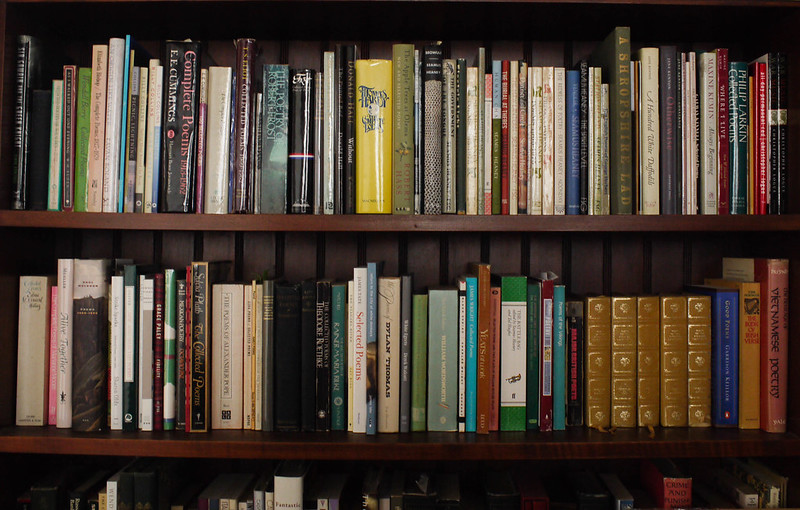
M and I spent time over the past week sorting through all our books. We took each one down from its shelf, decided its fate (donate, sell, or keep), then sorted the keepers into categories and reshelved them. At least temporarily, all of the poetry is in one place, filling two whole shelves. That’s a nice way to start April: knowing where the poetry is. And just in time for National Poetry Month, too.

In addition to working on my own poetry every day, I’ll celebrate as I’ve done in past years, by updating this post with a link to a new poem each day in April.

How will you celebrate? Read a poem a day. Share a poem you love in the comments here. Write a poem. Put it in your pocket. Put it in a letter. Send the words out to the world.

Love unfolded then, like crumpled petals
opening into sunlight,
unfurling at the stroke of spring

as we walked the seven miles of estuary,
reaching, after long mudflats, the beach,
the windless bay, the candle of the lighthouse,
waxen in the hazy air that hung like gauze
between us and the islands

and through an undertow of sea-mist
came the warmth of April sun
nuzzling at our dazzled, new-born skin

–from “Solway”, by Elizabeth Burns

April 1 ~ Solway, by Elizabeth Burns
April 2 ~ Jack, by Maxine Kumiin
April 3 ~ Lares and Penates, by Caki Wilkinson
April 4 ~ Tam Lin, Scottish ballad (see also, Fairport Convention’s version, with Sandy Denny singing)
April 5 ~ Maple Syrup, by Donald Hall
April 6 ~ La Tortuga, by Pablo Neruda
April 7 ~ Spring, The Sky Rippled with Geese, by Ted Kooser
April 8 ~ Tell the Bees, by Sarah Lindsay
April 9 ~ The Sick Wife, by Jane Kenyon
April 10 ~ Surrounded by Wild Turkeys, by Gary Snyder
April 11 ~ Dirt Cowboy Café, by Cynthia Huntington
April 12 ~ Carrefour, by Amy Lowell
April 13 ~ The Underground, by Seamus Heaney
April 14 ~ To Earthward, by Robert Frost
April 15 ~ The Long Meadow, by Vijay Seshadri
April 16 ~ The Hive, by Ellen Bryant Voigt
April 17 ~ Walking in the Woods, by Grace Paley
April 18 ~ Brokeheart, Just like that, by Patrick Rosal
April 19 ~ The Layers, by Stanley Kunitz
April 20 ~ Animals, by Frank O’Hara
April 21 ~ Involution, by Cullen Bailey Burns
April 22 ~ In Breton, by Ian Stephen
April 23 ~ Where the Bee Sucks, There Suck I, and The Bees, by William Shakespeare
April 24 ~ Levin in Love, by Anne-Marie Turza
April 25 ~ I started Early – Took my Dog – , by Emily Dickinson
April 26 ~ Blueberry, by Diane Lockward
April 27 ~ Silence, by Marianne Moore
April 28 ~ Palindrome, by Lisel Mueller
April 29 ~ On Wenlock Edge the wood’s in trouble, by A. E. Housman
April 30 ~ A Woman Written in as a Wren, by Mary Kane

After this, I’ll be quiet about Antarctica for awhile

They did it.

They walked 1800 miles in 105 days, following Scott’s footsteps, and made it back to safety at Scott Base, Antarctica. And made history.

The band of armchair explorers followed on the blog, Google Earth, and Twitter yesterday evening as Ben and Tarka walked the final miles. The online community was buzzing. I can only imagine what the reception was like at Scott Base. And their relief. And how overwhelming people and buildings and furniture and everything else must have seemed.

There’s a webcam at Scott Base, with a bleak view of some storage containers, vans, and the choppy ocean. Last night, some online followers were begging the expedition support team to ask Ben and Tarka to step out in front of the camera.

At one point after their arrival, briefly, someone (or two) stepped into the lower right corner of the frame, and I took a screen capture. Was it B&T? I’ve no clue. But let’s just say it was.

Ben and Tarks at Scott Base?

I don’t know exactly why I’m so obsessed with Scott’s story, but I just plain am. And thank you for bearing with me.

I’ll wrap this all up by leaving you in the words of others: of the Irish poet Derek Mahon, who writes about the terrible last words and moments of Captain Lawrence Oates, who walked out into the white and never returned; of Herbert Ponting, expedition photographer, who survived; and of Edward Wilson, some say Scott’s closest friend, who perished with him in the tent, 11 miles short of One Ton depot.

Antarctica

‘I am just going outside and may be some time.’
The others nod, pretending not to know.
At the heart of the ridiculous, the sublime.
He leaves them reading and begins to climb,
Goading his ghost into the howling snow;
He is just going outside and may be some time.
The tent recedes beneath its crust of rime
And frostbite is replaced by vertigo:
At the heart of the ridiculous, the sublime.
Need we consider it some sort of crime,
This numb self-sacrifice of the weakest? No,
He is just going outside and may be some time
In fact, for ever. Solitary enzyme,
Though the night yield no glimmer there will glow,
At the heart of the ridiculous, the sublime.
He takes leave of the earthly pantomime
Quietly, knowing it is time to go.
‘I am just going outside and may be some time.’
At the heart of the ridiculous, the sublime.

–Derek Mahon, Gallery Press, 1985

The Sleeping Bag

On the outside grows the furside. On the inside grows the skinside.
So the furside is the outside and the skinside is the inside.
As the skinside is the inside (and the furside is the outside)
One ‘side’ likes the skinside inside and the furside on the outside.
Others like the skinside outside and the furside on the inside
As the skinside is the hard side and the furside is the soft side.
If you turn the skinside outside, thinking you will side with that ‘side’,
Then the soft side furside’s inside, which some argue is the wrong side.
If you turn the furside outside – as you say, it grows on that side,
Then your outside’s next the skinside, which for comfort’s not the right side.
For the skinside is the cold side and your outside’s not your warm side
And the two cold sides coming side-by-side are not the right sides one ‘side’ decides.
If you decide to side with that ‘side’, turn the outside furside inside
Then the hard side, cold side, skinside’s, beyond all question, inside outside.

–Herbert George Ponting
from South Polar Times, Vol. 1, 1911

The Barrier Silence

The silence was deep with a breathe like sleep
As our sledge runners slid on the snow,
the fate-full fall of our fur-clad feet
Struck mute like a silent blow
On a questioning “hush” as the settling crust
Shrank shivering over the floe;
And the sledge in its track sent a whisper back
Which was lost in a white fog-bow.
And this was the thought that the Silence wrought
As it scorched and froze us through,
Though secrets hidden are all forbidden
Till God means man to know,
We might be the men God meant to know
The heart of the Barrier snow,
In the heat of the sun, and the glow
And the glare from the glistening floe,
As it scorched and froze us through and through
With the bite of the drifting snow.

–Edward Adrian Wilson from South Polar Times, Vol. 3, 1911

52 Photos ~ Wide open spaces

Phoebe's field

The Snow Man

One must have a mind of winter
To regard the frost and the boughs
Of the pine-trees crusted with snow;

And have been cold a long time
To behold the junipers shagged with ice,
The spruces rough in the distant glitter

Of the January sun; and not to think
Of any misery in the sound of the wind,
In the sound of a few leaves,

Which is the sound of the land
Full of the same wind
That is blowing in the same bare place

For the listener, who listens in the snow,
And, nothing himself, beholds
Nothing that is not there and the nothing that is.

–Wallace Stevens

~~~~~~~~~~~~~

This photo and post are in response to this week’s theme for the 52 Photos Project. You should participate, too! Read about how it works here. You can see a gallery of everyone’s photos for this week’s theme here. To see a list of all my blog posts for this project, go here.