Unless it is. Highly unusual. And cute.
Watch this.

While you play this.
[youtube https://www.youtube.com/watch?v=yca2BCwAnBQ&w=640&h=480]
We’re just here to make you smile.
(Thanks, H!)
Isn't it self explanatory?
Unless it is. Highly unusual. And cute.
Watch this.
While you play this.
[youtube https://www.youtube.com/watch?v=yca2BCwAnBQ&w=640&h=480]
We’re just here to make you smile.
(Thanks, H!)

Second semester’s here and you know what that means, right?
You guessed it: rehearsals for the annual high school musical have begun! This year’s production is “Drood” (or “The Mystery of Edwin Drood”), based on the unfinished Dickens novel. It’s written by Rupert Holmes.
Yes, THAT Rupert Holmes.
Fortunately, this production doesn’t include any references to piña coladas or personal ads. It’s more about murder, mystery, and several unsavory characters (all exceedingly more palatable). It also features a different ending every night (voted on by the audience). What could be more exciting for a group of actors than to not know which numbers they’re doing at the end of the second act until after intermission? Can you imagine that pressure? I’m glad I’ll be in the audience and not on that stage…
The cast list was announced yesterday. H is Princess Puffer. She runs an opium den. A stage parent can be proud of that.
Below is a recording of one of Puffer’s songs. Come to the show May 14-16 to hear H and her fellow cast members do it even better.
http://youtu.be/dnERX5_hw4I
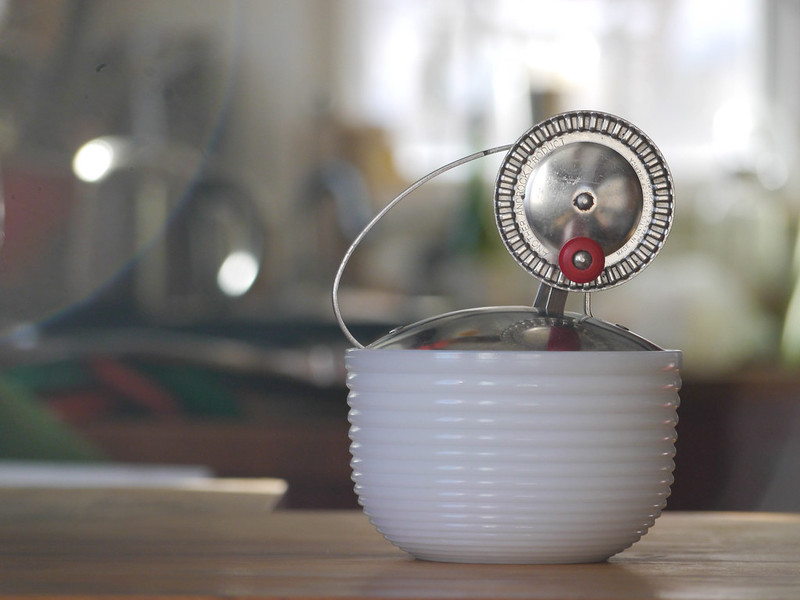

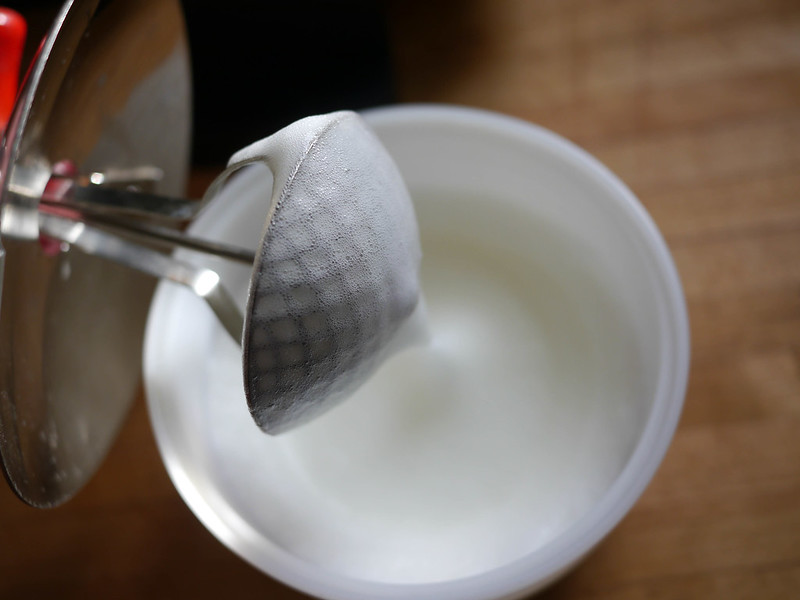
Sunday morning, making waffles.
You can’t do this stealthily if you’re going to use the egg whipper. And you can’t make these waffles without the whipper.
[soundcloud url=”https://api.soundcloud.com/tracks/187824432″ params=”color=ff5500&auto_play=false&hide_related=false&show_comments=true&show_user=true&show_reposts=false” width=”100%” height=”166″ iframe=”true” /]
~~~~~~~~~~~~~~~~~~~~~~~~~~~~~~~~
This is the first in a (probably irregular) series of posts that will include sounds and images recorded at the same time and location.
A recipe is a list.
A recipe is a blueprint.
A recipe is a map.
The thing about an old family recipe is how it can help you reconstruct a memory and make it present. How just reading it is like reading a memoir of your own childhood, written as you lived the moment.
A recipe is an artifact.
A recipe is a thumbprint.
A recipe is a photograph.
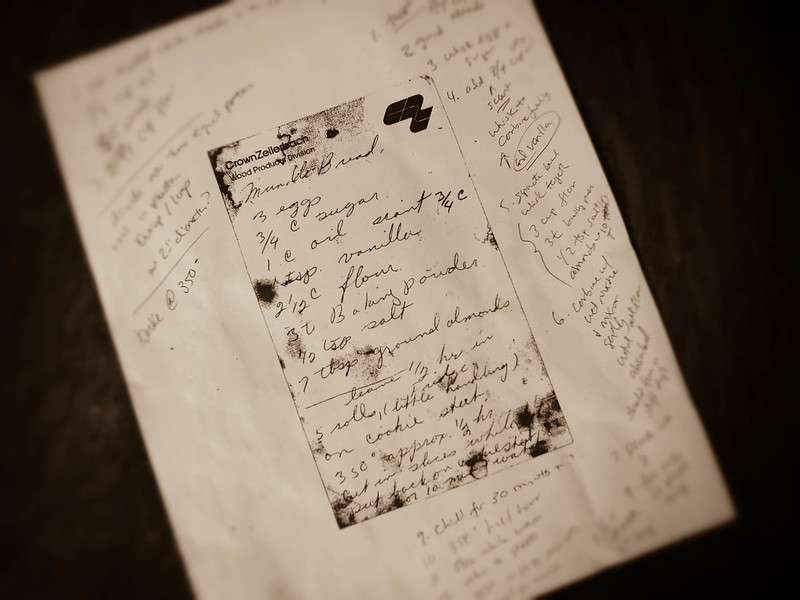
An old family recipe is a thing. A scrap of paper, an index card, a notebook page. It was scratched out on the back of a paper bag, or on the top sheet of the pad that sat by the telephone. It was ripped out of a magazine. It bears the evidence of being handled. It’s splattered, creased, greased. It preserves your mother’s handwriting, and your grandmother’s annotation: “From Shirl.”
A recipe is a whistle.
A recipe is a signal.
A recipe is a telephone.
The recipe is a practical thing. It directs and points. If it’s a good recipe, it stands by your shoulder and tells you just how much to stir that batter, just how dark to bake that bread, just what shape those cookies should be. Have always been. It tells you when you can trust your own judgement and when you must be exact.
A recipe is a thread.
A recipe is a story.
A recipe is circle.
The old recipe is a connection between the you that was and the you that is, between the people you loved and who loved you enough to cook for you, even when they are no longer here. If you’re lucky, it draws a thread from you back to a person so distant in your past that you never knew her. But she cooked this recipe for her little girl, who maybe grew up to be your grandmother.
An old family recipe is one tale in the long manuscript of things that made you you. It’s a story you recite as you follow it. It’s a story you put into the hands of your own children and tell them, “Eat this. Taste this. Remember this. Tell this.”
~~~~~~~~~~~~~
My sister and I are working on a project this year. We’re collecting our favorite family recipes, along with those of our extended family, to create a bound memory of tastes. Some of these recipes (like the one on this page) are childhood favorites, and some are ones that we’ve developed as we’ve lived on our own, feeding ourselves, our friends, and our families. If you’re reading this and you’re related to us, you’ll probably be hearing from us; we want your recipe memories, too!
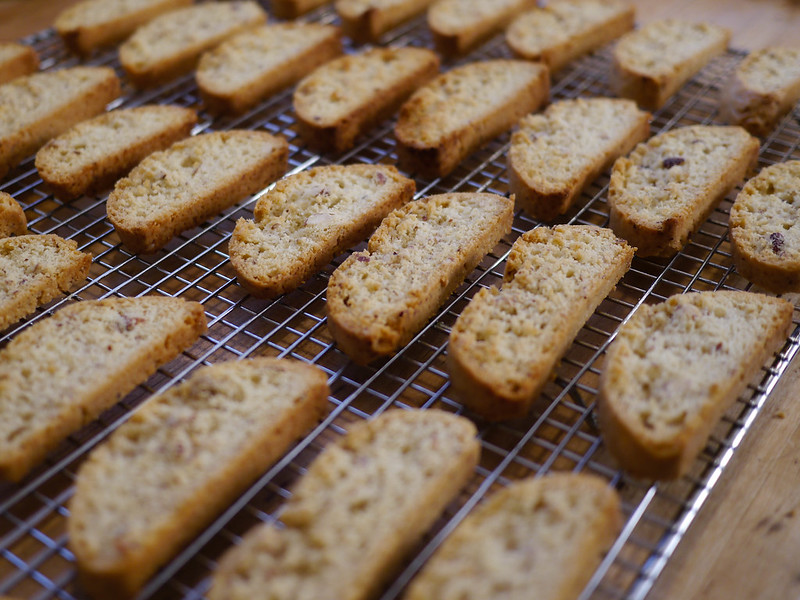
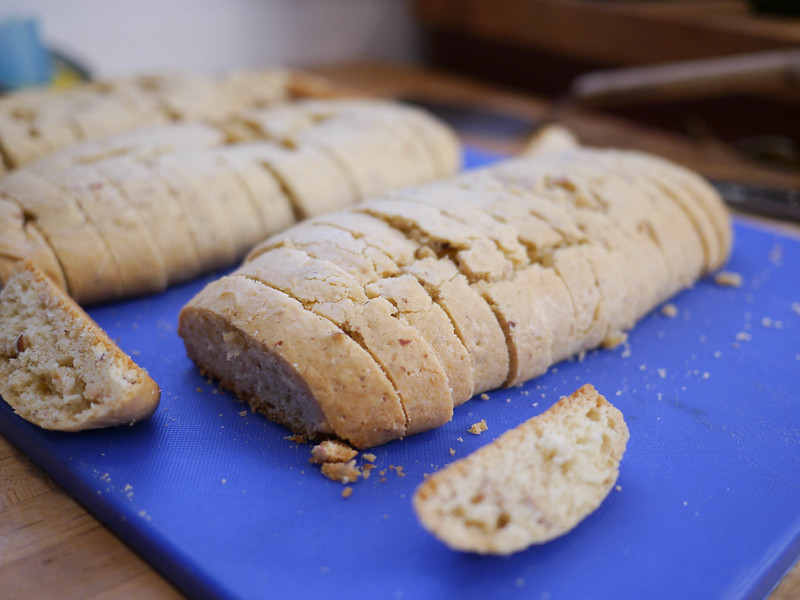
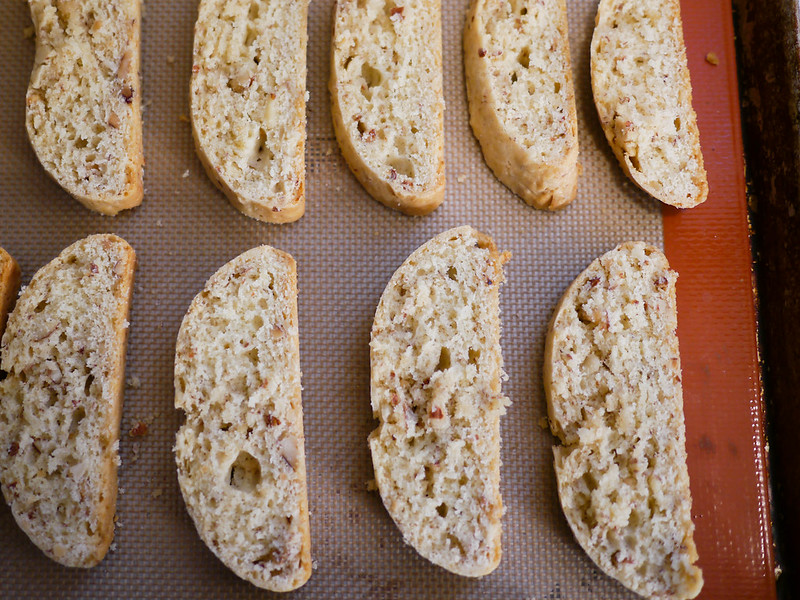
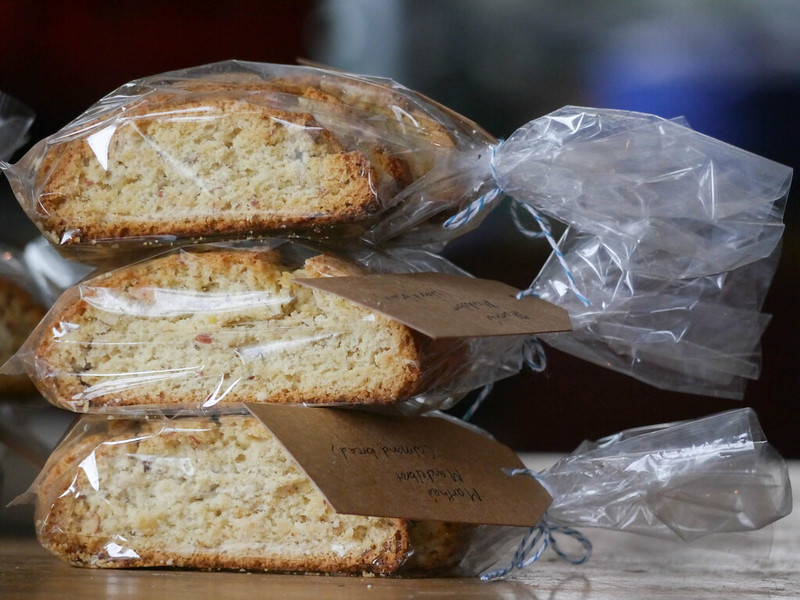
In the meantime, let’s start with our grandmother Martha’s Mandelbrot (also called mandel bread). Mandelbrot is Yiddish for almond bread. It’s a twice-baked cookie, pretty much the Jewish version of biscotti. It’s nutty. Not too sweet. Something you’d make to serve with coffee when the “girls” came over for mahjong. Or something you’d hand a teething toddler. Or something you, if you were me, would bake on one of your wistful days when you could have used a hug from your grandmother.

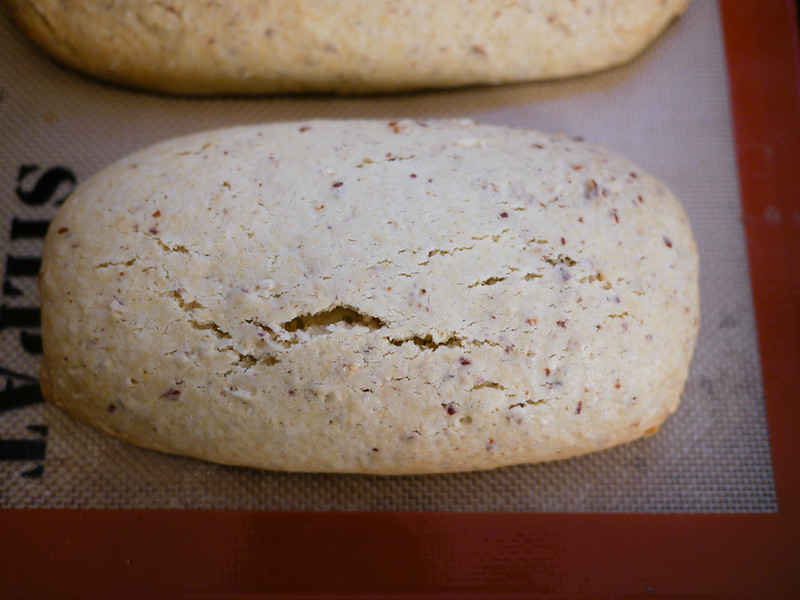

Ingredients
1 cup whole almonds
3 cups flour
3 teaspoons baking powder
1/2 teaspoon salt
3 large eggs
3/4 cup sugar
3/4 cup vegetable oil
1 teaspoon vanilla extract
The mandelbrot will easily stay fresh in a cookie tin for a week. They also freeze beautifully.
* Martha’s recipe makes no mention of toasting the almonds; this is how old recipes change as they travel time, I suppose.


Against all odds, after nearly half a century, I’ve come around to understanding January.
I know, some of you are thinking it took me long enough.
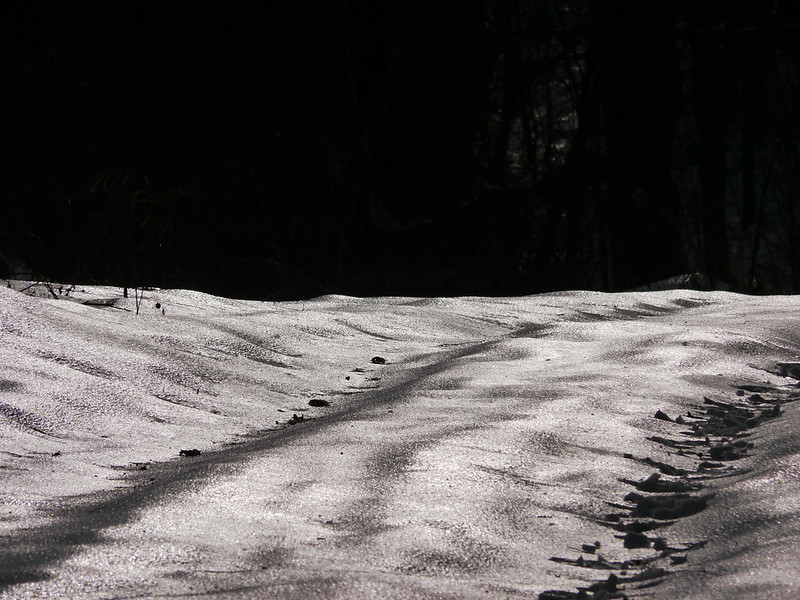
Now that the deepest and darkest of the winter has passed (though the coldest certainly hasn’t), and the observances, rituals and remembrances that must be paid have been paid, my pockets are empty and the land everywhere is draped in white, a table set in quiet anticipation of a celebration to come.
I don’t yet have a mind of winter, but I’ve stopped railing against it (at least this week) and am seeing it for what it is: a pause, an inhale, a still point.
I’m sure I’ve come to this place before, and will again, but today it seems fresh to me, this peace with January. This appreciation of the way the snow sparkles when sunlight strikes the crystals. This feeling that I’m allowed to waste a day reading or thinking or putting words into lines and no one but the animals will expect me to be responsible. This knowledge that the green ground is quietly waiting beneath the snow and ice, that spring is there, truly a coil, that will burst up given half a chance. If only I can be patient.
When my sister and I were little, we played endlessly with a set of wooden blocks, a handful of matchbox cars, and a collection of cheap plastic animals. One of our favorite, recurring games was to build a village for the animals from the blocks. Small houses, neat yards. Horses, cows, sheep, tigers, kittens, an alligator, Indian and African elephants. They all lived in this village. The town plan changed every time we built, but there was always one constant: a “church” with a steeple and an archway for a door. After we’d spent the afternoon building and arranging it all, we’d put the animals in their proper homes, put a lit flashlight in the church and turn off the overhead lights.
There it was. The town sleeping in the glow of the church. All that afternoon of building came to this: nightfall, quiet, and a soft glow.
March through December is raucous. Things are busy sprouting, then growing, then dying, then being cleared away. Plans are made and enacted. And then comes the night and the cold and everything is quiet and suffused by the glow we can’t even see, until January brings it back to us, minute by minute.
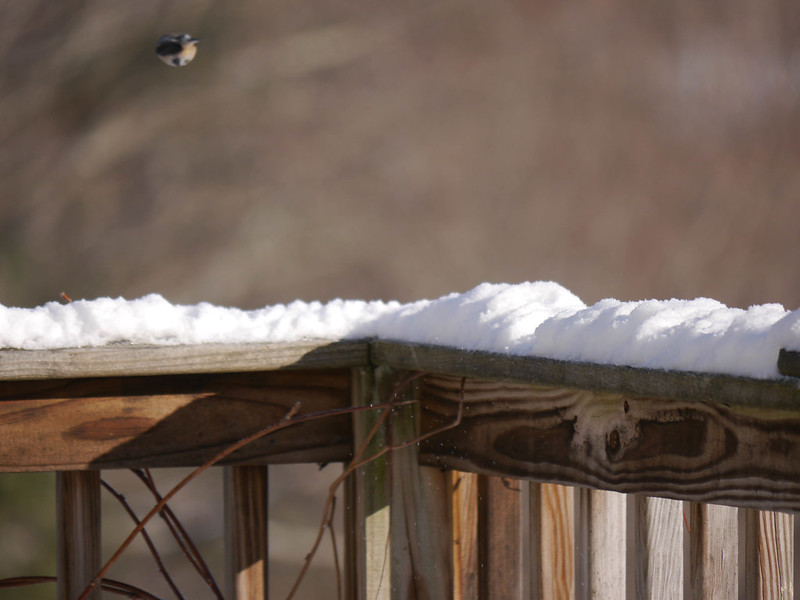
Today we have snow and ice, frost and fog. The people who plow our driveway have been by with the sander so we can escape the house if we want, but today (and today only) I have no want. I have everything I need. Everything I (or Dorothy Gale) ever desired is right here now.







[youtube https://www.youtube.com/watch?v=XqDlTKqxu2w&w=640&h=480]
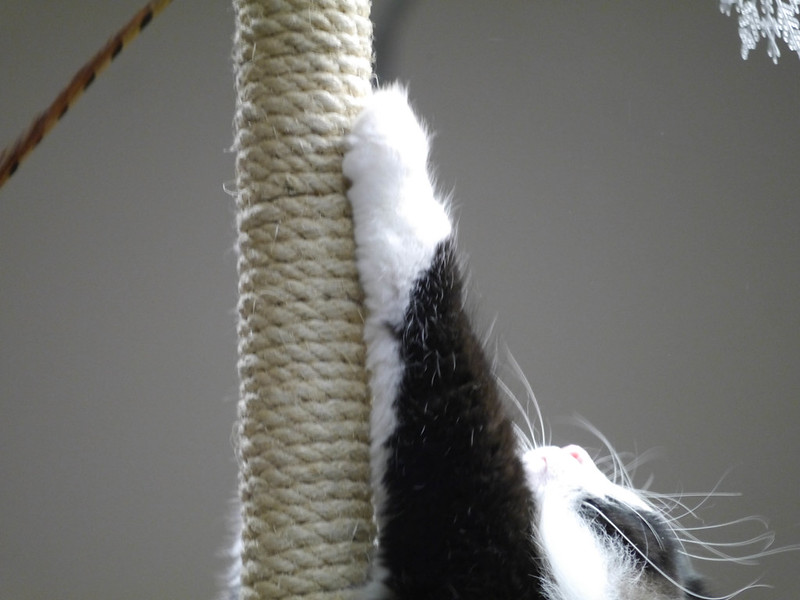
Last weekend we went up to Burlington to visit the annual cat show they put on there, something we’ve been meaning to do for years for H’s sake. It’s silly how long it can take us to get around to something we all agree we want to do. Imagine how long it takes us to do the things we must (but don’t want) to do.
The cat show took place in a large meeting room in a hotel. There were rows of benches (tables) with various sizes of cat carriers and cages. On one end of the room were the “rings,” which were u-shaped areas bordered by cages with a judge’s table in front.
Cat owners ferried their charges from the bench cages to the ring cages as their numbers were called for each judging class. Then judges took each cat in turn out of its cage, put it on the table, handled it, watched it move, put it back in its cage, and wrote the cat’s score in a notebook. After the judge had handled each cat in the class, ribbons were bestowed and owners returned their cats to the benches.
So, no agility stunts or running the cats around the rings with leashes like at the Westminster Kennel Club dog show, but if you got a seat up front you could get a good look at some beautiful cats, and you could wander the benches and talk to the owners, who were all exceedingly enthusiastic about their breeds of choice.
Some highlights of our day:
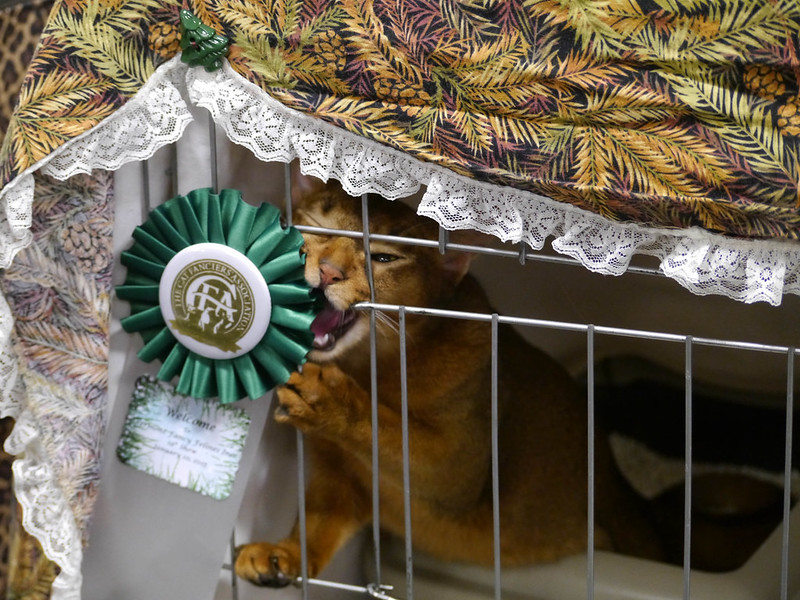
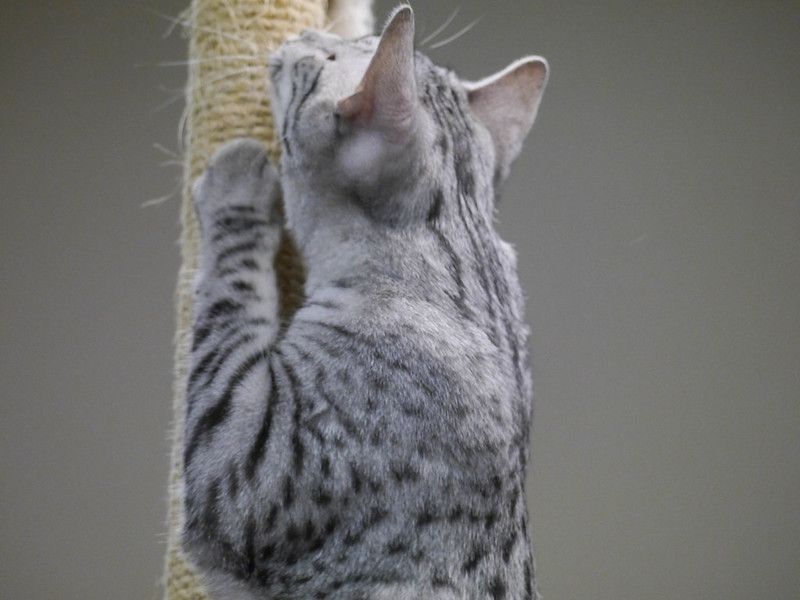
Seeing with our own eyes that our Abyssinian is not the only one who likes to act up.
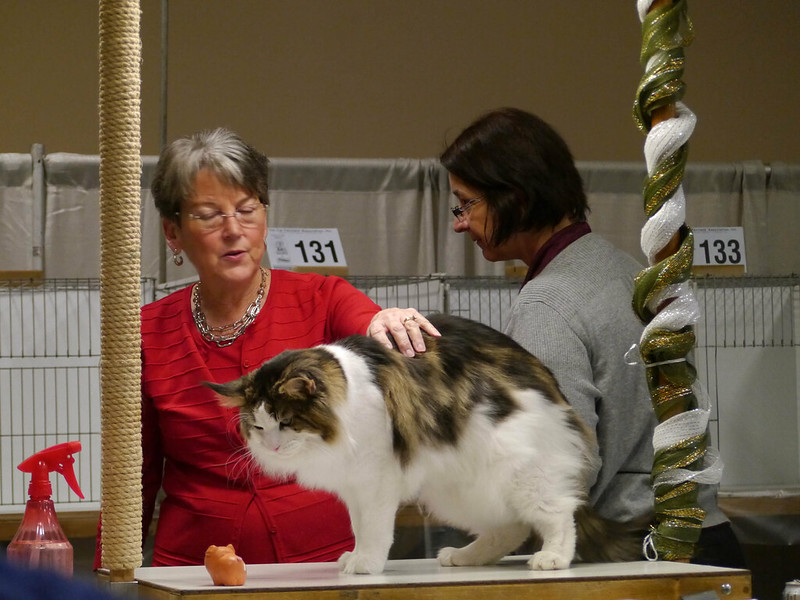
Getting a chance to see just how large and gorgeous Norwegian Forest Cats are.

Seeing cats of all spots, stripes, colors, fur lengths, and body shapes.
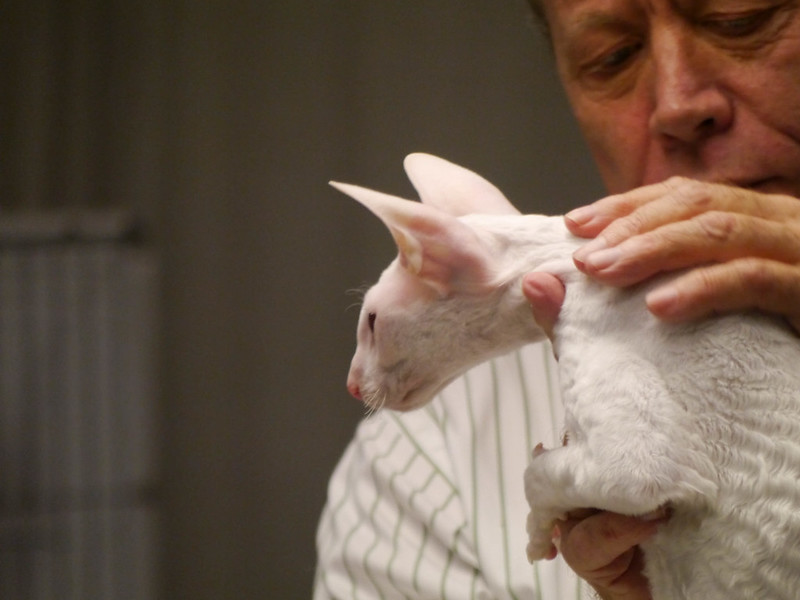
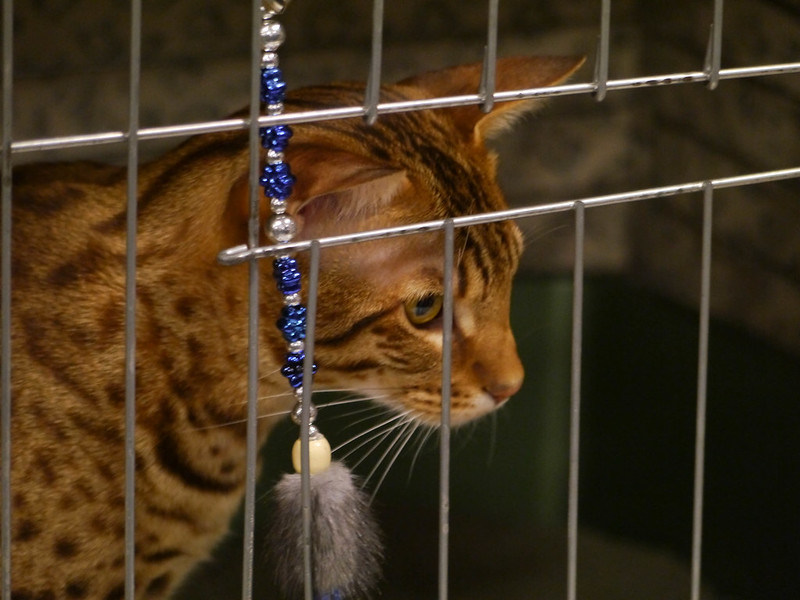
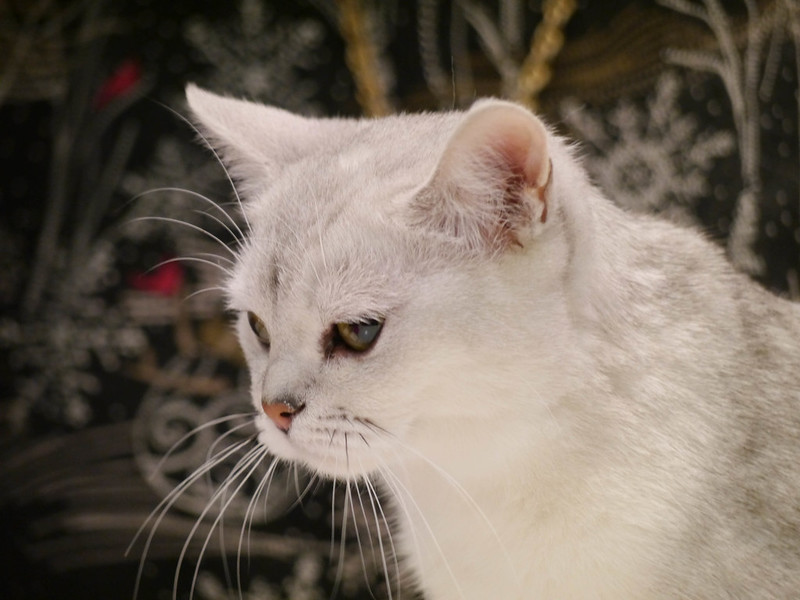
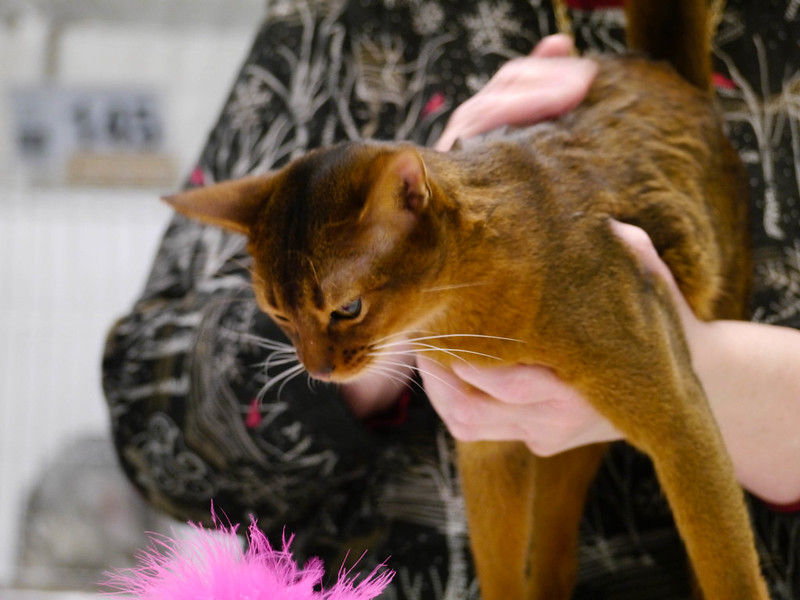
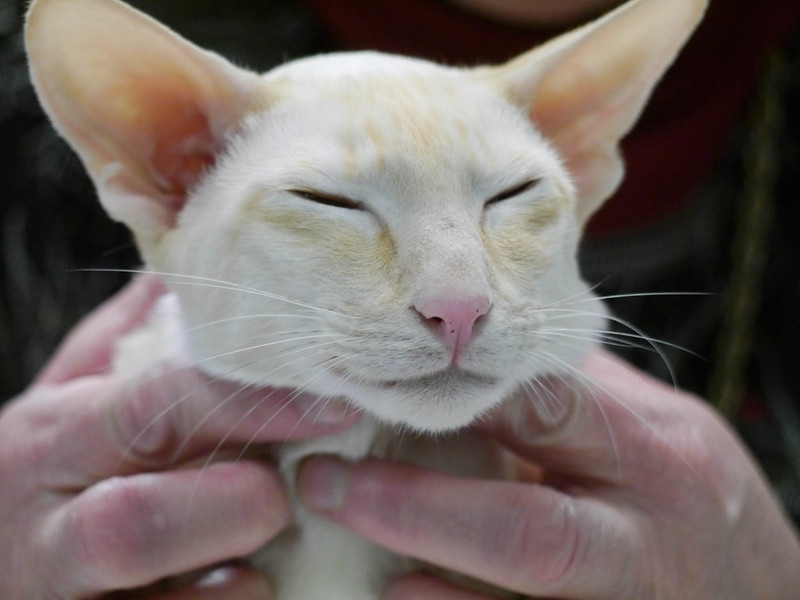
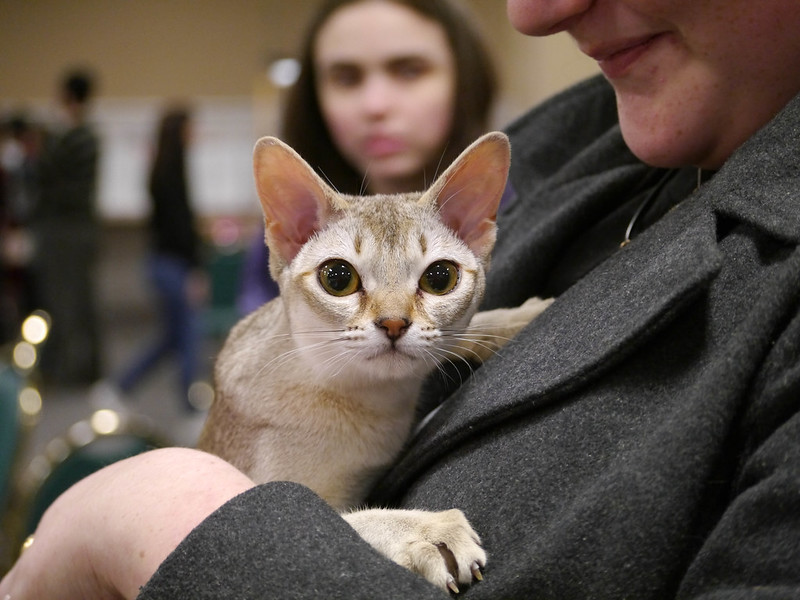
And meeting Zelda, a beautiful young cousin of our very own Singapura, Oyster.
I’ve heard from many of you dear people since I first posted about the Reading Challenge–and it looks like we have an Organization* (if not a Movement).
We’re so excited you’re joining us!
Here’s a brief recap of the plan:
To help us keep track of our progress, I’ll update the checklist every month. Green indicates the currently selected category. You can find the checklist anytime you want by clicking the “Reading Challenge” link in the menu bar above.
See you on February 9!

*Surely you know “Alice’s Restaurant.”

We’re reading.
Well, yeah, we’re always reading, but H told me about this 2015 Reading Challenge and it looked like fun, except I didn’t really want the pressure of reading an assigned book a week (even a self-assigned one) since I already have a big pile of books I want to read. The last thing I want to do is add more pressure to my life, or anyone else’s.
So, instead, we’re going to take it nice and slow, and read one book a month. By my reckoning, we’ll be finishing this challenge in 2019. H will be in college.
Eek.
Maybe I shouldn’t have done the math.
Anyway. This particular challenge is by category, not specific title. For instance, it asks you to read a book a friend recommended, or a memoir, or a book based on a true story. This gives you a lot of leeway in choosing a book — you can read anything that strikes your fancy as long as it fits somehow into the category.
(Notice how I slipped the word “you” into that last sentence?)
Want to join us?
Here’s how it’s going to work:
We’ll pick a new category on the 9th of every month. Why? Because. That’s why. (Also, I didn’t get my act together until today, so today’s as good a day to start as any.)
For the first month, I’ll choose the category (the challenge is a checklist, not a numbered list, so we’re going to attack in the order that pleases us). Then we all select a book that fits in that category and read it.
At the next 9th, I’ll post our selections here, our thoughts on what we read (if we have any), and the category for the next month (M will choose the category for the second month, H for the third, then back to me for the fourth, and so on).
If you’re joining us, you can use the category we choose, or choose your own. You can go faster or slower than we do. You can comment here to tell us what you’re reading or what you thought of your book, or you can just be a lurker.
It’s a no pressure book club.
But I’d really love it if you’d join us. How much fun would it be to talk about books together?
C’mon. Pleeeeze?
Okay, even if you don’t want to, WE are going to, and you can read about it here.
The first category is………
A book set in a different country
Now, let’s get reading!