
“Baby Can I Hold You” ~ Tracy Chapman

“Hurting Each Other” ~ Carpenters
“For Lovin’ Me” ~ Gordon Lightfoot
“Break it to Them Gently” ~ Burton Cummings

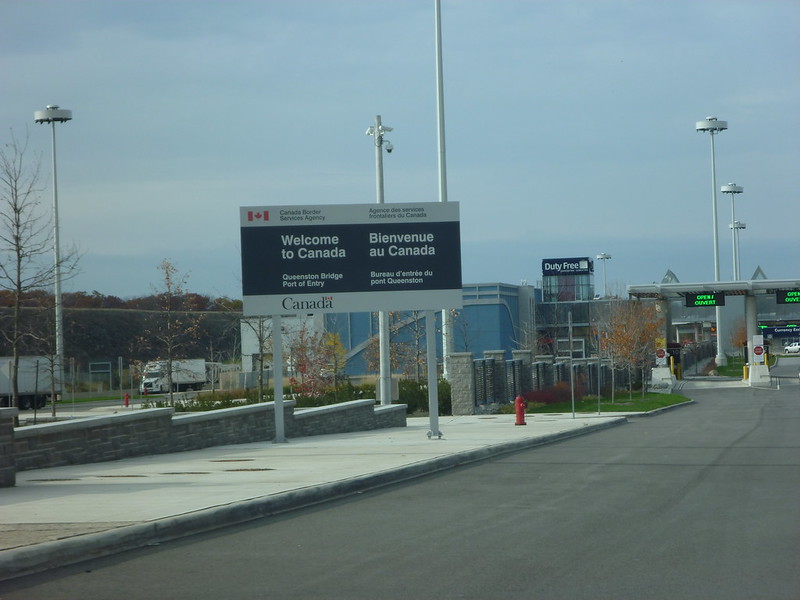
“American Woman” ~ The Guess Who
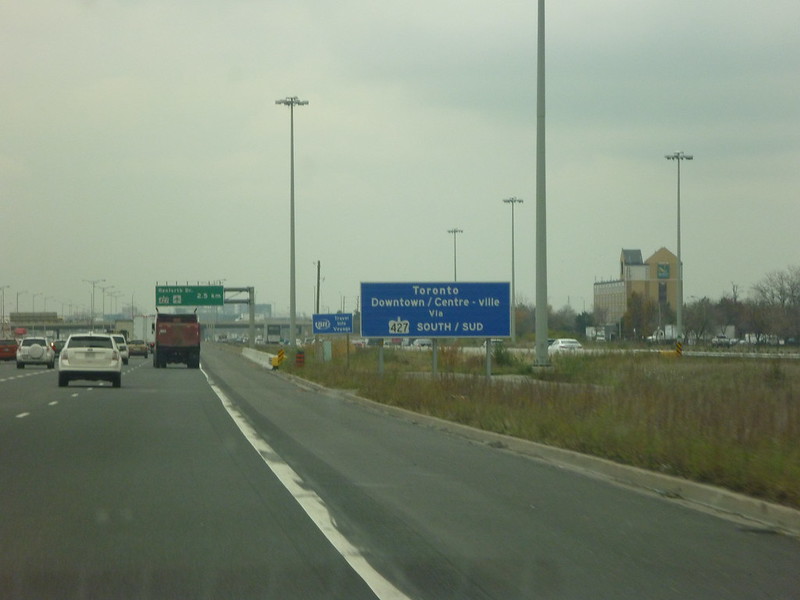
Isn't it self explanatory?

I’m writing this post on a bus and this is definitely a first for me. Not riding a bus, no. The writing part I mean.
I’ve ridden this bus (complete with wi-fi and dumb movie) plenty. I have an almost Pavlovian response to this bus because it takes me to Boston, to the airport, to adventure.
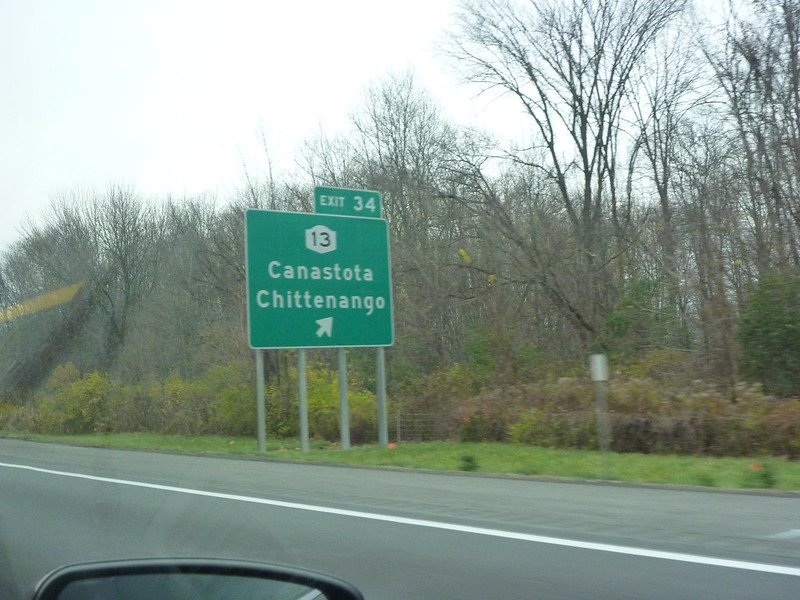
This particular bus ride is the first leg of a road trip to Toronto with my sister. We’re setting off from her place tomorrow morning. I suppose, since I’m blogging daily, you’re coming too.
The driver has turned off the lights. The movie’s just started. The moon’s following us. Let’s ride.
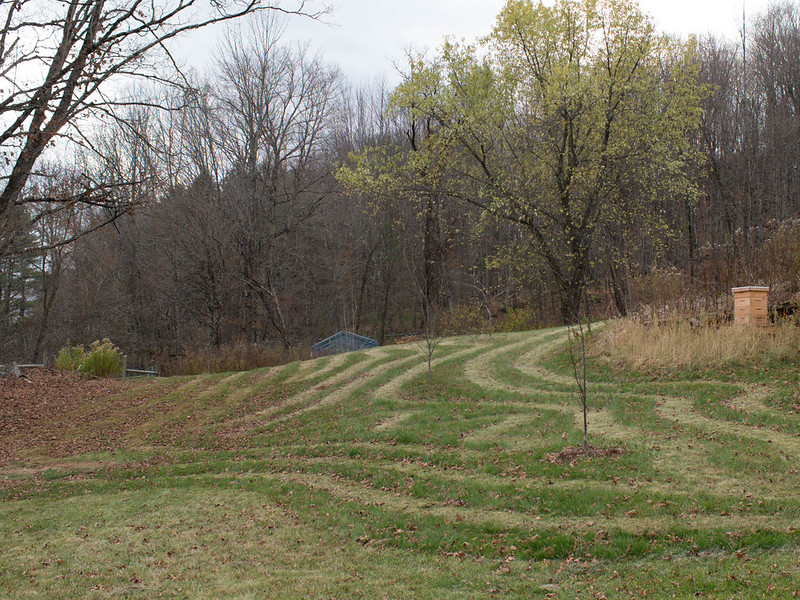
Vermont summers are fierce and semi-tropical. Not in temperature or humidity, but in explosive plant growth. The growing season is short. Everything that grows here is intent on getting as big as it can as quickly as it can. The fields and forests burst with green. Grape vines climb the maple trees. Morning glories slither their way into the wisteria branches. Honeysuckle and raspberry bushes grow thick and impenetrable. Corn grows eight feet high.
It’s beautiful, but in a somewhat claustrophobic way.
We’ve always laughed at the scene near the end of Hayao Miyazaki’s animated film Castle in the Sky, where the villain, Muska, pursues the heroine, Sheeta, and her magic crystal into the throne room of the eponymous castle. The castle is a ruin, inhabited only by a robot and centuries of plant growth. Muska, on entering the room, chasing Sheeta, desperately needing to get his hands on that crystal, pauses, looks around the the room in disgust and says something like, “Ugh. These PLANTS!”
I’ve heard M think that same thought on many a July day as he looks across the yard and see the vines strangling the apple trees and the lawn he just mowed visibly growing.
It’s enough to make you wish for a flame thrower.
~~~~~
You have to admire the peace of a day like today. We’re at the top of the roller coaster’s hill, at the far end of a pendulum’s swing. Everything is clean, shorn, stacked, coiled, compact, tucked in for the winter. If anything’s growing, it’s growing inward, downward.
This morning I pulled the grass from around the bases of the blueberry bushes and spread fresh pine mulch around them. I sat in the dry grass and pushed the mulch around while the dog sniffed around for leftover blueberries (wishful thinking, oh silly dog). I had this song in my head the whole time. I felt short and small, like a plant rooted to the land, ready to be steady, firm, and quiet.
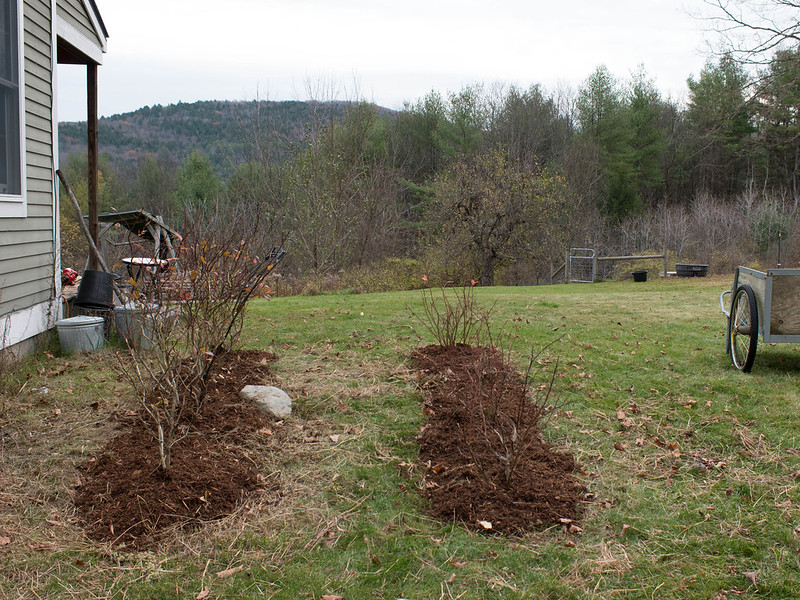
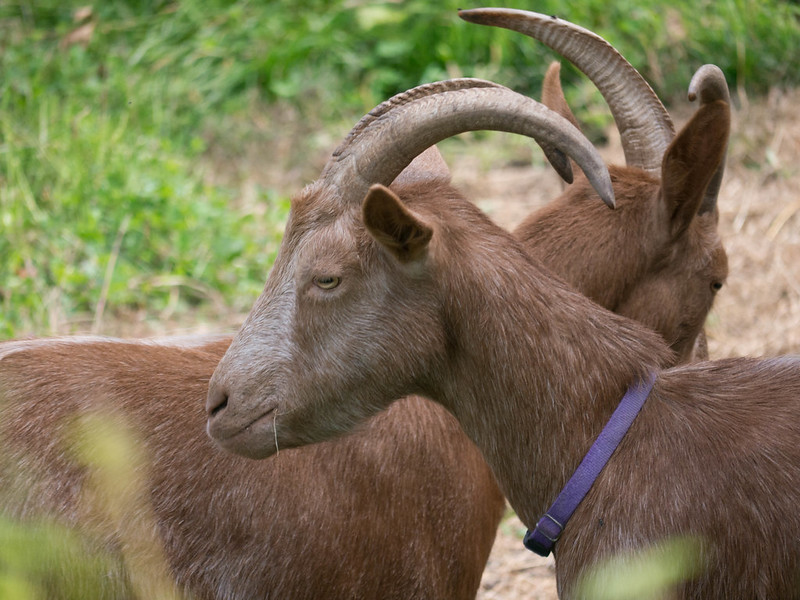
We often joke that we live on a micro farm, but it really is no farm. It’s an old farm house, a tiny barn, a handful of goats, a beehive, some inside animals, a scattering of fruit trees and bushes, and a sometimes garden.
We take our bit of farming seriously, love our land and animals, but we also realize we’re sort of just playing at it. That’s fine. Neither of us are from farming families. We have day jobs in the land of technology. What we do outside of those jobs we do for love, for curiosity, for learning, for attaching ourselves further to our home and our land and our lives.
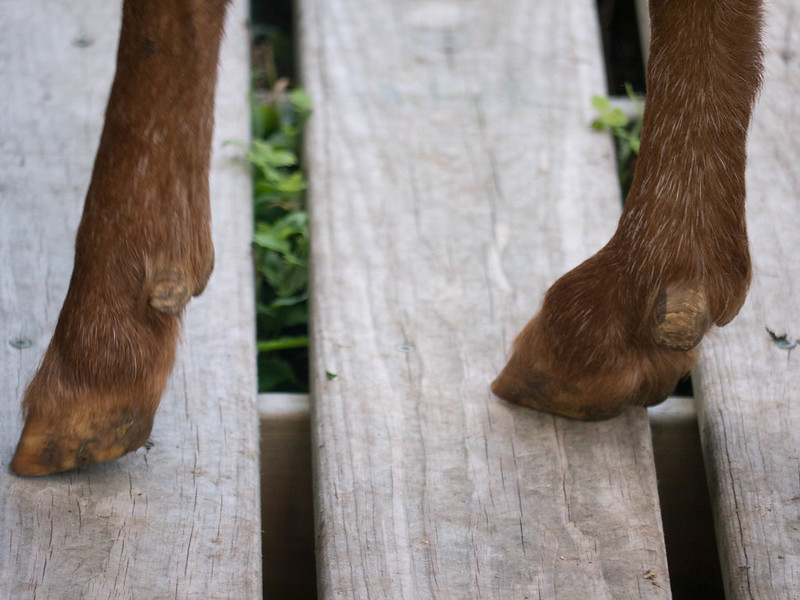
Even playing at farming brings us close to some of the realities of true farming, those moments and days when our already considerable admiration of farmers increases: Listening to the baby monitor all night to detect sounds of goat labor. Springing out to the barn with the “birth kit” to assist with a delivery. Hoof trimming, hay stacking, mucking, worming, vaccinating. Milk bottles stacking up in the fridge. Milk demanding to be made into cheese or cajeta or yogurt or something before it goes bad. The sick goat kid in the bathroom (and the car).
And then there’s the day when you see that you have more goats than you want to feed. Or, more accurately, more than you want to feed when you plan to breed more goats, birth more kids, to start the milk flowing again.
They’re not pets. They’re farm animals. We’ve named them all. Cuddled them all. Held them in our arms and on our laps. We’ve scratched their ears and horn buds, tended their wounds, smelled their warm breath, slipped them treats, toted hot drinking water out to them in the middle of a nor’easter. But they are not pets. They are farm animals.
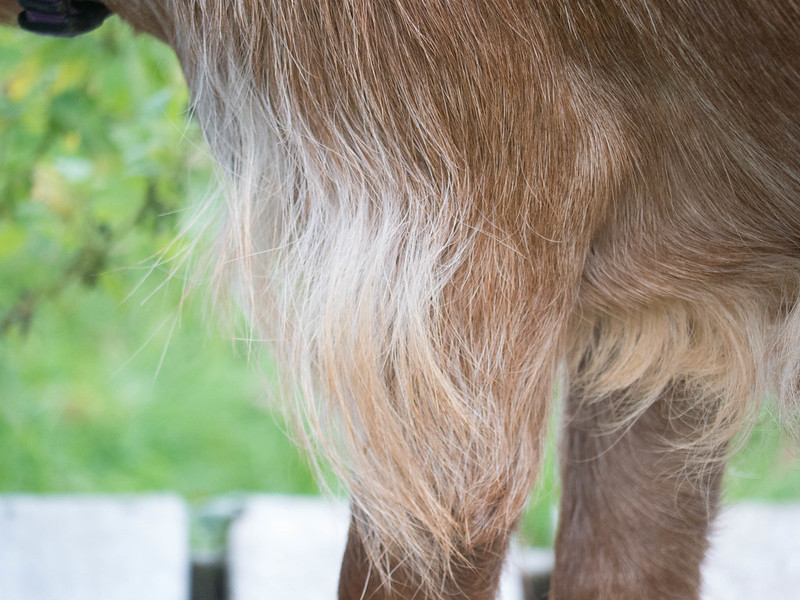
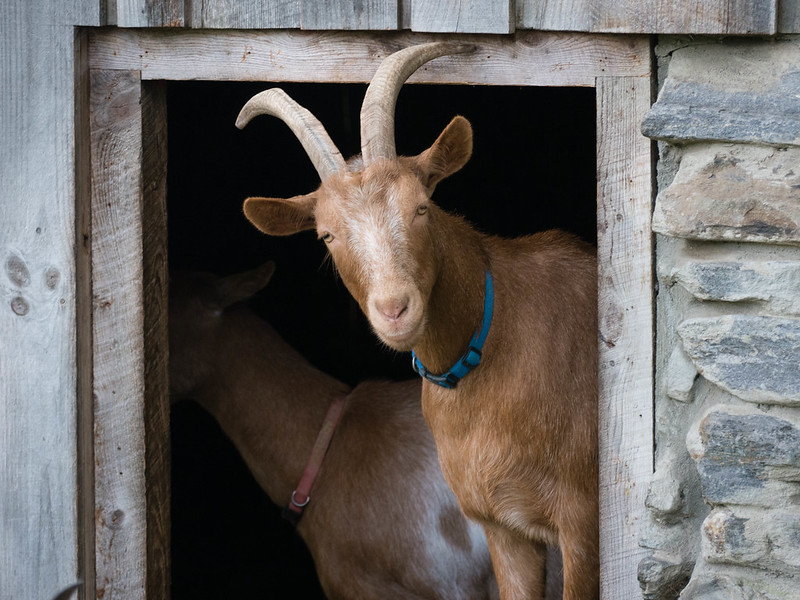
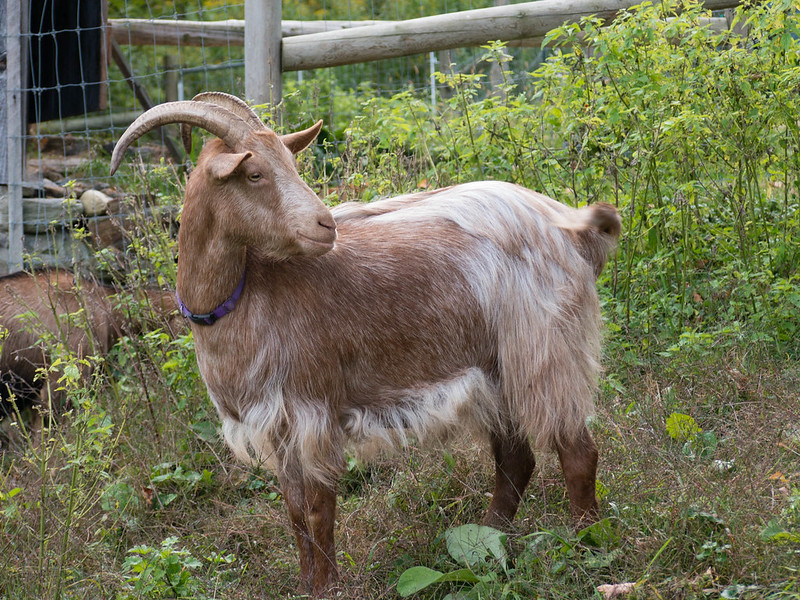
And so, to make room for more, to continue to breed these Guernseys, to continue to work on our cheese- and cajeta making, we’ve sold Albus and Lars, the first two goats born in our barn. We sold them to a retired man who loves them and whose only hobby is to care for his herd. They have a nice barn and pasture, several new goat friends. It’ll be a fine goaty life.
To tell the truth, our goat yard is fifty times calmer now than it was a month ago. Without the boys’ energy and horns, the remaining girls seem more settled and there’s far less pushing and shoving when I go to fill the hay feeder.
We stopped the milking, too, for the winter. None of us needs the winter milking experience again, at least not this soon. We’re talking about breeding a couple of the girls this fall, for fresh babies and milk come spring.
Right now, though, we, the animals, and the land have all come to a quiet halt, a slow exhale, just before the winter locks down.
From the window by my desk, I can see the bare branches of the blueberry bushes that gave so prolifically this summer. I can see the freshly shorn lawn, neat from the last mowing of the season. I can see the quiet hive; whoever is left in there is hunkered down for what’s to come.
I can see the goat yard, the girls nibbling at what’s left of the green, taking sips of water at the stock tank. And I miss those boys. I truly do. I miss Albus’ sweet face and the way he’d sniff noses with me in greeting. I miss Lars’ gorgeous feathery coat and the way he’d tip his head quietly down so I could scratch between his horns.
I miss them, but I’m happy for them, and for whatever’s to come to our little farm when the snows melt in the spring.

“How about November?” asks poet Mary Ruefle (in her lecture “On Secrets”) when, every April, she’s asked to contribute to a poetry reading in recognition of National Poetry Month.
April’s been crowned the month of poetry, but what does April need with poems? April is her own poem, all hopeful, beckoning and unfurling.
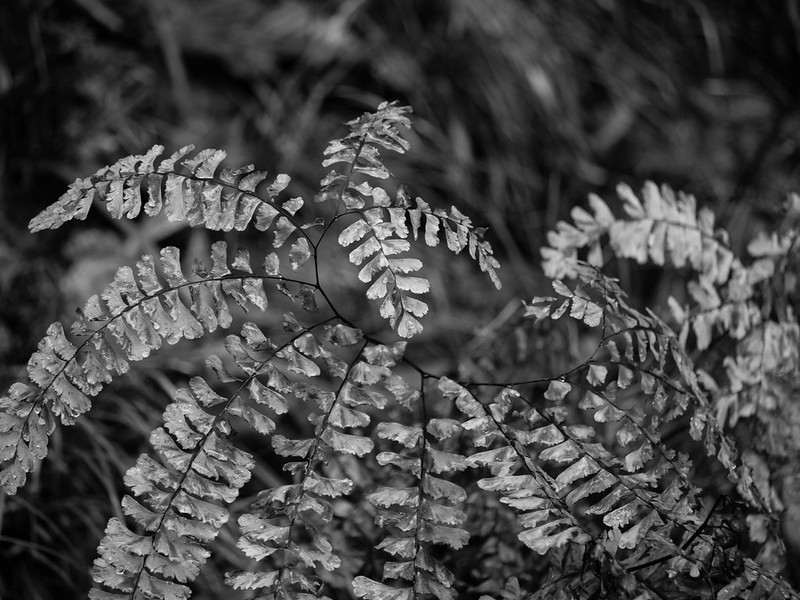
Poetry in April feels almost superfluous, a bit embarrassing, a gilded excess.
Poetry, Mary Ruefle says in that same lecture, is “clearly rooted in obscurity, in secretiveness, in incantation, in spells that must at once invoke and protect, tell the secret and keep it.”
What she and we know is the wonderful trick about a poem (and a November): while its secrets and spells seem hidden at first, they are unlockable, releasable.
Sit with a thick poem. Sit with a dark November day.
Say the poem out loud. Say the day out loud.
Notice its rhythms. Its shades of ochre. The times the sun rises and sets. The length of its lines. The bright green fur of moss along the ridge of a rain soaked log. The crunch of tires on gravel. The one bird on the one branch. The half rhymes in the alternating lines.
Isn’t there as much poetry in November’s dying hay field as in April’s burbling brooks?
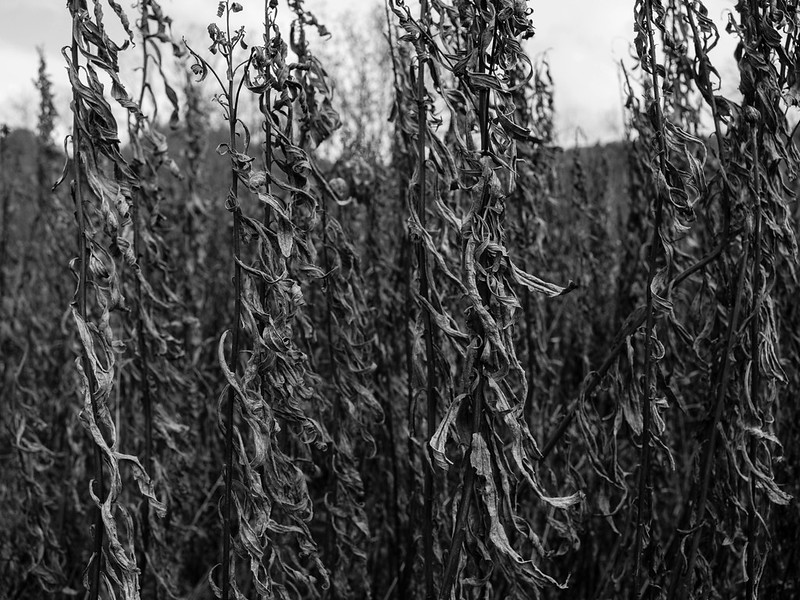
Thomas Hardy knew it as well as anyone. Life is hard, literature is bleak, and there’s a poem in that.
“A Saturday afternoon in November was approaching the time of twilight, and the vast tract of unenclosed wild known as Egdon Heath embrowned itself moment by moment. Overhead the hollow stretch of whitish cloud shutting out the sky was as a tent which had the whole heath for its floor.”
We know it in our bones. And here we are, listening for what poems November will tell us. And the ones we’ll tell it.

My first orchid. It followed me home. Let’s see how long I can keep it alive.
Also, this song came on the radio the other day. It just makes me smile (And the video? Whoa. Let’s just say it was a simpler time…)
Oh gosh, today has Monday written all over it.
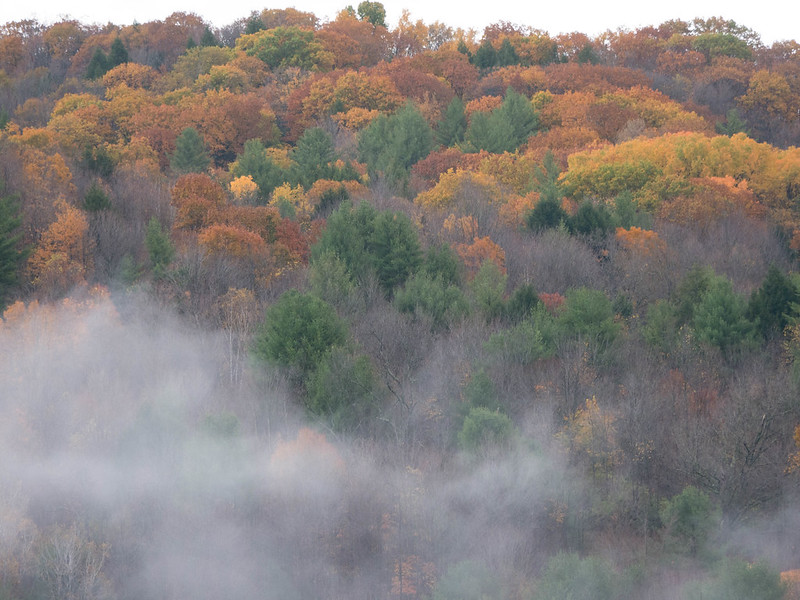
It started cold and predictably grey after a week or more of dark and dreary days. Where’s that brilliant October slant of light that’s made to cheer us even as November stealthily stalks us?
But I see a glimmer this afternoon, sunlight on the hills, picking out the few, stubborn remaining red leaves as if to spotlight the fading luminaries of the autumn floor show. Time to take final bows, put the folding porch chairs and the garden hose away, sweep the porch, remember where we (gleefully) stowed that snow shovel last spring.
You know how I feel about this.
But I have some antidotes in mind. Some new projects, another stab at NaBloPoMo (really? really. hmmm).
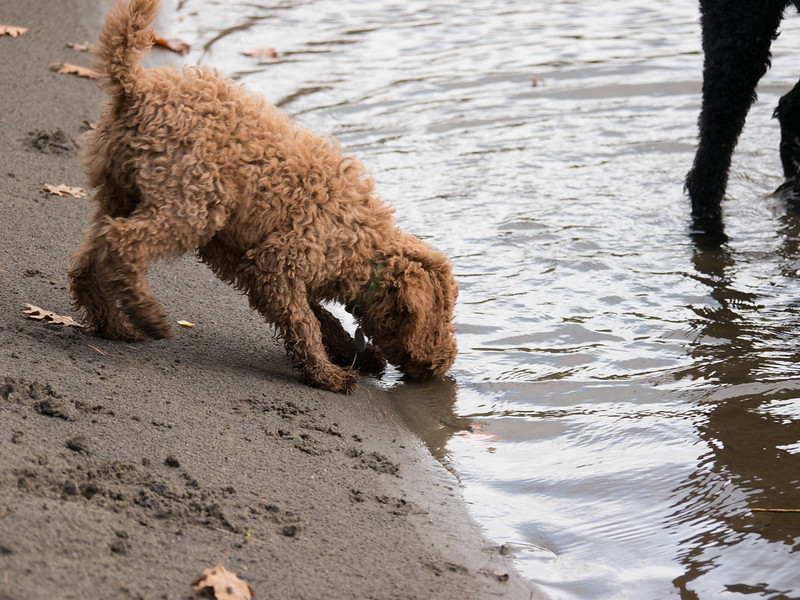
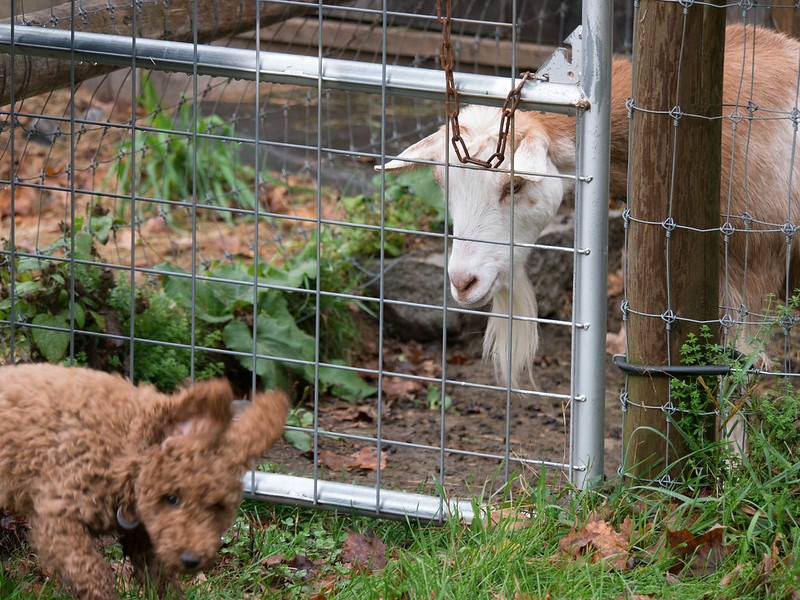
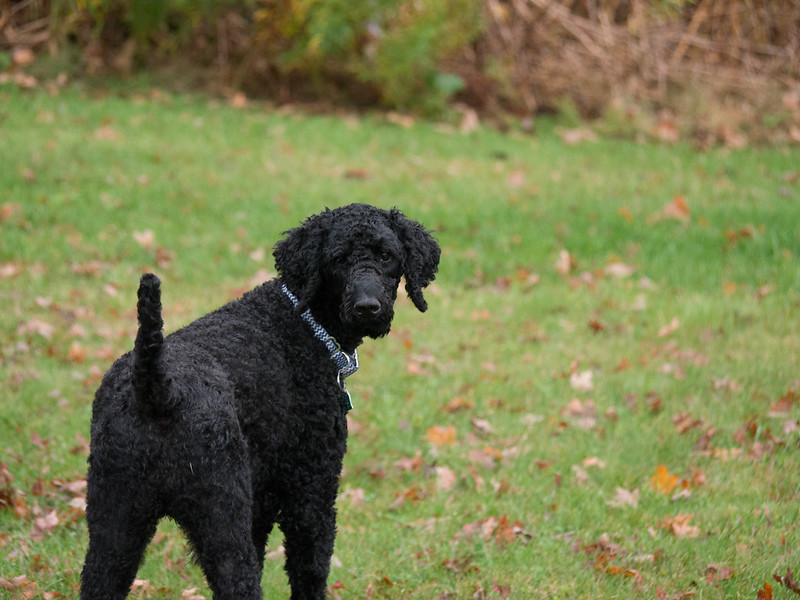
And when all else fails, in the face of bad news on the radio, sad news from far-off family and friends, dark afternoons, and the usual palette of worries and anxieties, I offer you my sister’s new baby: Brutus. Three months old and you just can’t be too sad when he’s in the room.


We don’t know what we’re doing.
We try. We read books, scan websites, talk to beekeepers, use our intuition. We follow all the instructions and still this beekeeping thing remains a beautiful mystery.
Remember in the summer when we introduced Elspeth II? We checked and checked for weeks and there were no eggs. Other beekeeping pals told us to be patient; it can take weeks. At last, at last! We peeked in that hive and saw eggs and capped brood, and wiped our netted brows with relief. There was still time for the colony to build itself up and store enough honey to survive the winter.
On a routine check later, we worried again: no eggs.
A later check: no eggs, no capped brood, lots of honey.
Was the queen dead? Sick? Gone?
As weeks passed, we grew reluctant to open the hive, imagining the dismal state of things that we’d find: the eggless chambers, the dwindling population, the bodies.
Finally, this past weekend we decided it was time to check, just to be sure.
We lifted the cover and there were a few bees, but the hive was awfully quiet. We looked at the top level (the “super” where we had hoped the bees would collect honey for us to gather at some point) and it was empty of comb.
Quiet hive.
But as we dug deeper into the hive, a level or two down, what did we find? Bees, glorious bees, packing the frame with pollen, nectar, and honey, and…glory bee… baby bees!
We didn’t spot the queen. We don’t even know who laid the eggs, Elspeth II or maybe a new queen they raised on their own? We didn’t ask questions. We closed up the hive and walked back to the house quietly smiling.
We don’t know what we’re doing. Thank goodness the bees do.